Best Gear, Jigs & Rigs That Work for Squid Fishing
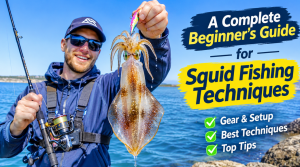
Squid fishing is an exciting and rewarding way to enjoy fishing, whether you’re casting from a pier, exploring shallow coastal waters, or drifting over productive weed beds in a boat. Squid, particularly calamari, are aggressive visual predators that respond to the movement, color, and presentation of artificial squid jigs.
The secret to catching more squid isn’t simply choosing an expensive lure. It’s understanding where squid hunt, how they react to different jigging movements, and how to adjust your equipment to changing conditions.
In this guide, we’ll explore practical squid fishing techniques for beginners and experienced anglers alike. You’ll learn how to select the right rod, reel, gear, jigs, rigs, locations, work squid jigs effectively, identify productive fishing locations, and adapt your presentation when squid become reluctant to bite.
Whether you fish a pier, a rock ledge, a kayak or a drifting boat, you’ll find a method here.
1. Understand Where to Find Squid
Finding squid is one of the most important parts of successful squid fishing. Even the best jig won’t produce consistent results if you’re fishing in an area without squid.
Look for these four important features when selecting a fishing location.
Weed Beds and Seagrass
Weed beds are among the most productive squid fishing locations. Squid use underwater vegetation for shelter, hunting, and spawning. Small baitfish and prawns also gather around these areas, providing an attractive food source.
Cast around the edges of weed patches rather than repeatedly fishing the same small section.
Rocky Structures and Drop-Offs
Rocky reefs, harbor walls, underwater ledges, and drop-offs provide excellent ambush opportunities. These structures attract baitfish and create areas where squid can hunt.
When fishing from a pier, try working your squid jig parallel to the wall. From a boat or kayak, follow the edges of underwater structures.
Water Depth and Clarity
A depth of approximately 2–5 meters is a useful starting point, although squid can also be caught in extremely shallow water.
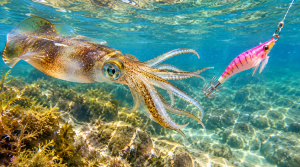
Clear water is particularly helpful because squid are visual hunters. You can sometimes see squid following your jig before they attack.
Look for Moderate Current
Extremely strong currents can make squid fishing difficult. Sheltered bays, harbors, and protected coastal areas often provide more comfortable conditions for presenting lightweight squid jigs.
2. Choose the Best Squid Fishing Rod and Reel
Having the correct equipment improves casting distance, lure control, and your ability to detect subtle squid bites.
Best Rod for Squid Fishing
The best rod for squid fishing balances casting distance with a forgiving tip. Experienced anglers favour two options:
- A 7 ft, 2–4 kg spin rod with a flexible tip: a flexible all-rounder for piers, boats and kayaks. The soft tip absorbs the squid’s lunges and stops the jig being pulled free on the strike.
- An 8 ft egi rod with a fibreglass-style action: slower than full graphite, but it covers more water than a standard 7 ft bream rod and helps you work the jig gently.
If you fish purely from land, a slightly longer rod gives you extra reach.
A dedicated EGI rod around 8 feet long is an excellent option for anglers who regularly use squid jigs. Its length helps cover more water, while a softer, more flexible action provides better control during jigging.
The best rod for squid fishing should offer:
- Lightweight construction for comfortable fishing sessions.
- A responsive tip for detecting subtle touches.
- Enough flexibility to prevent pulling squid tentacles away from the jig.
- Good casting distance for covering weed beds and shoreline structures.
Choose a Suitable Spinning Reel
A 2500-size spinning reel balances well on these rods for many beginner squid fishing setups. The key feature is a smooth, light drag, because squid pull backwards in sudden lunges. A loose drag stops the tentacles tearing off during an aggressive strike. Several anglers also keep a very light setting so the squid cannot rip free.
- Braid main line (12–20 lb): it is thin, casts further (one angler estimates 30–40% extra distance) and lets you feel the take as the jig sinks. Go heavier in weedy water so you get your jigs back.
- Fluorocarbon leader (8–20 lb): braid is highly visible, and squid are visual hunters. Use one to two rod lengths of fluorocarbon, which also cuts through weed and resists rock abrasion.
Look for a smooth drag system with precise adjustment. Squid sometimes grab a jig lightly, and an excessively tight drag can pull the jig away before the hooks properly engage.
3. Select the Right Squid Jigs
Learning how to use squid jigs starts with understanding how they work.
Squid jigs are specially designed artificial lures featuring a weighted body and a crown of small hooks instead of a conventional single fishing hook.
They imitate prawns or small baitfish through darting, fluttering, and sinking movements.
The sharp prongs at the back point backwards, so when a squid grabs the jig and pulls away, it impales itself. That is why you should keep steady, gentle pressure and never let the line go slack while you wind in.
Popular Squid Jig Colors
Color selection can make a significant difference. Squid sometimes respond strongly to one color while completely ignoring another.
Four useful colors to keep in your tackle box include:
- White: A classic option that can produce excellent results in different conditions.
- Red or redhead: A reliable alternative when white jigs stop producing bites.
- Blue: Worth trying when squid are feeding on small baitfish.
- Chartreuse: A bright green-yellow color that can attract attention in suitable conditions.
For the best squid jig colors for night fishing, experiment with bright, dark, white, and natural-looking patterns rather than assuming one color always works.
Choose the Correct Jig Size
Jig size affects sinking speed and presentation.
- Size 2.5: Useful in shallow water because it sinks more slowly giving more “hang time” of 2–3 m.
- Size 3.0: A versatile middle-ground option.
- Size 3.5: It casts further and sinks faster, so stay on top of it to avoid snags. Useful when targeting larger squid or fishing deeper water.
- If you are unsure, buy a mix of sizes. Start bigger to cover water, then drop down when small squid follow but will not commit.
Smaller jigs provide more hang time during the sinking phase, while larger jigs reach the bottom faster.
Change sizes when squid become inactive or when you want to target larger specimens.
4. How to Use Squid Jigs Correctly
Understanding how to use squid jigs is essential for consistent results. Unlike ordinary soft plastic fishing, squid jigging involves creating sharp movements followed by controlled pauses.
Step 1: Cast and Allow the Jig to Sink
Cast toward a weed bed, reef edge, or other promising structure. Allow the jig to sink toward the bottom.
Pay attention to your line. When it suddenly becomes slack, the jig may have reached the bottom.
The sinking time depends on water depth and jig weight. As a starting point, allow approximately 3–4 seconds per meter of water, then adjust according to the jig’s actual sinking rate.
Step 2: Perform Two or Three Sharp Rod Lifts
Point your rod toward the line and make two or three quick upward movements.
These sharp movements make the jig dart upward like a fleeing prawn or baitfish.
Step 3: Let the Jig Sink Again
After the upward movements, pause and allow the jig to fall naturally.
This sinking phase is particularly important because squid frequently attack when the jig is dropping.
Keep your line under control and watch for unusual movement.
Step 4: Repeat the Retrieve
Continue alternating sharp lifts and controlled sinking movements until the jig reaches the shoreline or pier.
Experiment with sideways flicks to imitate escaping baitfish. You can also introduce short, fast movements followed by longer pauses.
5. Best Squid Fishing Techniques for Shallow Water
Shallow-water squid fishing can be surprisingly productive. You don’t always need deep water or complicated equipment to catch good-sized squid.
When fishing in less than a meter of water, use a lighter jig that sinks slowly.
Try an aggressive presentation initially to attract attention. If squid follow the jig without attacking, slow everything down.
Sight fishing is especially exciting because you can sometimes watch squid chase the lure.
A useful approach is:
- Start with an erratic jigging movement.
- Watch for squid following the lure.
- Slow the presentation when squid approach.
- Allow the jig to sink naturally.
- Change colors if squid repeatedly refuse to attack.
Remember that squid may become hesitant after several unsuccessful approaches. Moving to another section of the weed bed can produce better results.
6. How to Catch Squid From Shore
You don’t need a boat to catch squid. Piers, jetties, harbor walls, and rocky shorelines can all provide excellent opportunities.
When learning how to catch squid from shore, focus on covering water rather than repeatedly casting into one location.
Start with a long cast toward a productive weed bed. Retrieve the jig using sharp lifts and controlled pauses.
After each cast, change your casting direction slightly. Slowly walk along the pier or shoreline to cover different sections of underwater vegetation.
If you catch a squid, cast back into the same area. Squid often gather in groups, so several more may be nearby.
7. Best Squid Fishing Rig for Beginners
A simple single-jig setup is a great starting point. However, a multi-jig rig can help experienced anglers cover different depths and test different jig colors.
One useful option is a two-jig T-knot rig.
How to Build a Two-Jig Squid Rig
You will need:
- 15–20 lb leader material.
- One suitable sinker.
- Two squid jigs.
- A suitable connection to your main line.
Rigging Instructions
- Tie a sinker to the end of your leader using a reliable fishing knot.
- Leave enough leader above the sinker to position the first jig at your preferred height.
- Create a dropper loop by folding the leader and passing the tag through the loop four times.
- Lubricate the knot and tighten it carefully.
- Convert the dropper loop into a T-knot by wrapping the line around itself six times and passing the loop through the central opening.
- Attach the first squid jig to the side branch.
- Repeat the process farther up the leader for the second jig.
- Ensure the two jigs are far enough apart that they cannot reach or tangle with each other.
- Connect the finished rig to your main line using an FG knot, double uni knot, or suitable swivel.
The best squid fishing rig for beginners is ultimately the simplest setup they can tie and manage confidently. Start with one jig before experimenting with multiple jigs.
Always ensure the combined weight of the sinker and jigs stays within your rod’s maximum casting rating.
Also, always wet the line before you tighten any knot to avoid weakening it. To change colors, push the line back through the jig’s nose and swap it. It takes seconds, with no cutting and retying.
8. How to Fish for Squid at Night
Night fishing can be productive around illuminated harbors, piers, and sheltered coastal structures.
When learning how to fish for squid at night, pay attention to existing light sources. Harbor lights can illuminate the water and attract baitfish, creating opportunities for squid to hunt.
Avoid shining a bright moving headlamp directly into the fishing area. Keep unnecessary light away from the water and use your headlamp only when needed for safety and handling equipment.
At night, fish around lit harbours or piers, where baitfish gather and squid follow. Work walls parallel to the structure with an “erratic, stop” retrieve. The jig falls slowly during the stop, which is when squid often grab it.
Do You Need an Underwater Fishing Light?
In an already illuminated harbour you generally do not need extra lighting, and a moving head torch can spook squid, so switch it off while you fish. In truly dark spots, though, anglers use a submersible green light for squid fishing to draw baitfish and squid closer. For boat or pier use, a heavy duty squid fishing light setup with a secure cable, a weighted housing and a reliable battery handles waves and wind. Check local rules before you use underwater lights.
A heavy duty squid fishing light setup may be worth considering in darker locations where local conditions and regulations allow artificial fishing lights.
A submersible green light for squid fishing is another option anglers may investigate, but the supplied fishing examples do not establish that green lights are essential or consistently outperform natural harbor illumination.
Choose Your Night Fishing Jig Colors
For the best squid jig colors for night fishing, pick glow or white jigs you can see, so you can watch squid chase. Use a silent jig in shallow water and save rattles for deeper water. Avoid fishing through ink slicks, because squid seem reluctant to feed there.
Also, experiment with bright, white, dark, and natural-looking jigs. Observe how squid respond rather than relying on a fixed color rule.
Most importantly, maintain control of your jig during the sinking phase.
9. Best Time of Day to Catch Squid
The best time of day to catch squid is typically dawn, dusk and after dark, when baitfish move and squid hunt. Tide matters less than many believe. One angler fishes shallow reef edges from about two hours before low to two hours after low, and catches squid in just 3–4 ft of water by sight fishing. Spring days can also fish well when conditions are calm.
But, there isn’t one universally perfect time to catch squid. Conditions, tides, water clarity, available baitfish, and local structure all influence activity.
Early morning and evening are useful periods to explore, while nighttime harbor fishing can also produce excellent results.
Pay attention to tidal changes. One particularly interesting approach is fishing around low tide when shallow reefs, weed beds, and drop-offs become easier to identify.
A practical starting window is approximately two hours before low tide through two hours after low tide.
However, don’t assume squid only feed during high tide. Productive fishing can happen during different tidal stages.
10. Landing and Handling Your Squid
Once a squid grabs your jig, maintain steady pressure rather than making an aggressive strike.
Squid have delicate tentacles, and excessive force can pull the jig away.
When fishing from a high pier or jetty, use an appropriately sized squid gaff hook for pier fishing when necessary to lift a larger catch safely. Never attempt to lift a heavy squid using only a light fishing rod.
Keep your hands clear of the jig’s sharp crown hooks and be prepared for squid to release ink when handled.
Always follow local fishing regulations, size restrictions, and catch limits.
Frequently Asked Questions About Squid Fishing
1. What is the easiest way for beginners to catch squid?
Start with a lightweight spinning rod, a suitable squid jig, and a simple single-jig setup. Cast toward weed beds, allow the jig to sink, make two or three sharp lifts, and repeat.
2. What depth is best for squid fishing?
Water between approximately 2 and 5 meters is a useful starting point. However, squid can also be caught in very shallow water when suitable structure and baitfish are present.
3. What squid jig color works best?
White, redhead, blue, and chartreuse are useful options. The most productive color changes depending on conditions and squid activity.
4. Can you catch squid at low tide?
Yes. Squid can be caught around low tide, particularly near shallow reefs, weed beds, and rocky structures that hold baitfish.
Besides, squid hunt baitfish along shallow reef edges at low tide, and you can sight fish them in very shallow water.
5. Why do squid follow my jig but not bite?
They may be hesitant because of your jig color, movement, or presentation. Try changing the jig color, size or retrieve, as well as reducing the speed, and allowing the jig to sink naturally. Slow down, give a few small twitches and let the jig drop.
6. Do squid prefer shallow or deep water?
Both can produce results. Shallow water offers opportunities for sight fishing, while deeper water can be productive around weed beds, drop-offs, and sheltered bays.
7. What is the best squid jig size?
Size 2.5 suits shallow water and smaller squid, while 3.5 suits bigger squid and longer casts. Carry both.
8. Do I need an egi-specific rod?
No. A 7 ft, 2–4 kg spin rod works well, though an 8 ft egi rod gives extra reach and a softer action.
9. Should I use a tight or loose drag?
Use a light drag so the squid’s tentacles do not tear on the strike.
Conclusion
Successful squid fishing comes down to understanding squid behavior, choosing productive locations, and presenting your jig naturally.
You don’t need expensive equipment or complicated techniques to get started. A lightweight rod, smooth-drag spinning reel, suitable squid jig, and properly tied rig are enough to begin.
Key Takeaways
-
- Target clear water, weed beds, reefs, and underwater structures.
- Use a flexible rod and a smooth, adjustable drag.
- Experiment with white, redhead, blue, and chartreuse squid jigs.
- Use sharp jigging movements followed by controlled sinking pauses.
- Change casting angles to cover more underwater territory.
- Keep your line tight enough to detect subtle squid touches.
- Don’t overlook shallow water or low-tide fishing opportunities.
- Adjust your lure size and color whenever squid stop responding.
- Use a 7–8 ft rod, a 2500 reel, braid and a fluorocarbon leader.
- Most bites come on the sink, so let the jig fall and keep contact with the line.
- Rotate jig size and color until you find what squid want that day.
- Fish dawn, dusk and night, and skip the head torch in lit harbours.
- A two-jig T-knot dropper rig makes color changes fast and reduces tangles.
The biggest lesson is to stay adaptable. If squid follow your jig without striking, change the color, size, or movement. Once you discover what they’re responding to, repeat that successful presentation and make the most of your fishing session.
Squid fishing rewards simple, smart habits: fish clear water near weed and structure, use a flexible rod and a light drag, rotate jig size and colour, and always let the jig sink. Add a T-knot dropper rig, a sensible night plan and safe landing methods, and you will catch more squid with less effort.
