Surf Fishing Tutorial: Read the Beach, Find and Catch More Fish
Surf fishing can seem intimidating when you are just starting out. You arrive at the beach, look at the waves, and wonder where the fish are hiding.
Should you cast far beyond the breakers, fish close to shore, or target the deeper water between sandbars?
Most beginners cast as far as they can, wait, and go home empty-handed. The good news is that learning to read the beach is easier than most beginners think.
This complete surf fishing tutorial explains how to read the water, choose gear that works, put your bait where fish actually feed, identify productive beach structures, recognize fish-holding areas, choose effective bait and tackle, and adjust your fishing strategy according to the tide.
By understanding sandbars, troughs, holes, cuts, and rips, you can stop casting randomly and start targeting areas where fish naturally feed and travel.
Before that, you may have to read these common mistakes in surf fishing so you can learn the technique from the pro anglers
1. How to Read the Beach for Surf Fishing
The first step toward becoming a successful surf angler is learning to recognize underwater structures. Fish rarely distribute themselves evenly along a beach. They often gather around deeper water, current channels, and areas where waves disturb the sand and expose natural food.
Identify Sandbars and Troughs
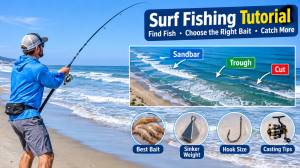
Sandbars and troughs are two of the most important structures to identify. A sandbar is an elevated underwater ridge of sand that usually runs parallel to the shoreline. You can often recognize one by watching where the outer waves begin breaking.
A trough is a deeper channel between the shoreline and a sandbar or between two underwater structures. Darker water often indicates deeper areas, while waves may travel over a trough without breaking before crashing against its shallower edges.
These deeper areas provide fish with places to move, feed, and find shelter. Species such as surfperch, croaker, corbina, halibut, and other coastal fish may use these structures depending on the location and season.
- Sandbar: look for waves cresting and crashing on shallow sand.
- Trough: look for darker water, and waves that pass over without breaking and then crash on the lip near shore.
- Wash: the foamy water where waves hit the bar stirs up crabs and sand fleas, so small fish and then big fish gather there.
How to Recognize Productive Troughs
- Look for darker water running parallel to the beach.
- Watch for waves that pass through an area without breaking.
- Identify the shallow lips where waves begin cresting and crashing.
- Look for deeper channels close enough to reach with your fishing equipment.
Once you identify a possible trough, make several casts before moving along the beach. A small halibut or another fish may be holding in a relatively narrow section of deeper water. Remember, structure indicates potential, not a guarantee of fish.
Find Holes and Points
Holes are deeper depressions in the sandy bottom, often located near sandbars and troughs. Points are elevated sections of sand that extend into the water. Both can create useful feeding areas because they influence water movement and provide access to different depths.
Look for differences in water color and wave behavior. Lighter water may indicate shallower sand, while darker sections can suggest a hole or deeper trough. Waves that break over one section but continue without breaking over another can reveal underwater depth changes.
When you find a promising hole, try fan casting across the entire structure. Make a few casts in different directions, then gradually move along the beach. Spending too much time in one unproductive location can reduce your chances of finding active fish.
2. Locate Rips and Cuts
After identifying sandbars and troughs, the next step is recognizing rips and cuts. These structures can be particularly productive because they influence how bait and fish move through the surf zone.
What Is a Rip Current?
A rip is a channel of water moving away from the shoreline toward the open ocean. You may recognize one by cloudy or disturbed water surrounded by clearer sections of the beach.
The moving water can stir up sand and dislodge small marine creatures, creating feeding opportunities for fish. Bait may also be carried along the edges of the channel, attracting predators searching for an easy meal.
Instead of casting directly into the strongest outward flow, try fishing both sides of the rip. Pay attention to the direction of the current and position your bait where displaced food may travel.
Find Cuts Between Sandbars
A cut is a deeper channel formed between adjoining sandbars. Unlike the elevated sandbar sections where waves break, waves may travel through a cut without breaking.
These channels are sometimes described as fish highways because they provide routes between deeper offshore water and the shallower surf zone. Fish may enter through these openings, move along nearby troughs, and search for food around holes and other structures.
One productive strategy is to locate a cut that connects with an inshore hole. This combination provides a possible travel route and a nearby feeding area. Rather than casting randomly, target the opening, surrounding trough, and connected deeper water.
3. Three Places Where You Should Cast
Understanding how to find fish in the surf zone becomes much easier when you focus on three practical casting locations. These areas provide different feeding opportunities, and fish may move between them depending on the tide and conditions.
a. Close to the Shoreline
Never assume that fish are always far offshore. Many species move surprisingly close to the beach to feed on sand fleas, small crabs, ghost shrimp, and other creatures washed around by incoming waves.
The first waterline can be especially productive during an incoming tide. Try making a short cast into the shallow water and allow your bait to sit near the natural feeding area.
b. In Front of or Behind a Breaking Wave
When a wave breaks, it often reveals an elevated sandbar. The deeper water in front of and behind that structure can attract fish moving along the beach.
Try casting just beyond the breaker or into the trough behind the sandbar. Fish frequently travel through these deeper sections while searching for food.
c. Directly on Top of a Sandbar
Sandbars can also hold feeding fish. When waves wash over elevated sand, they disturb small crustaceans and other creatures living beneath the surface. Fish may move onto the bar to take advantage of this exposed food.
These three locations give you a simple starting strategy: fish close to shore, in the trough near the breaker, and on top of the sandbar. If you have multiple rods and local regulations permit their use, you can test different distances simultaneously and concentrate on the area producing the most bites.
4. Ten Practical Tips to Catch More Fish in Surf Fishing
Tip 1: Choose Your Target Species
Before buying bait or selecting a fishing rig, decide which species you want to catch. Different fish require different approaches. For example, smaller coastal species may respond well to shrimp and small circle hooks, while Spanish mackerel may require larger hooks and live baitfish.
Research seasonal fish activity in your area and select tackle that matches your target species.
Tip 2: Use Appropriately Sized Hooks
Beginners sometimes believe that bigger hooks automatically catch bigger fish. However, smaller hooks can be more effective when targeting common surf species such as whiting, croaker, pompano, and similar fish.
Hook sizes around size 1 to 1/0 may work for many smaller species, depending on the hook manufacturer and fishing conditions. Larger predators may require stronger, larger hooks. Always match the hook to your target fish and bait.
Tip 3: Select the Correct Sinker Weight
A sinker that is too light may roll back toward shore or fail to keep your bait in the intended fishing area. Pyramid sinkers are a useful option because their shape helps them hold position in sandy surf conditions.
A practical starting point is approximately 3 ounces in calmer conditions and 4 ounces when waves and current are stronger. Adjust according to your rod’s rated casting weight and the amount of bait attached.
Tip 4: Use Fresh, Natural Bait
When considering what bait to use for surf fishing, freshness and local availability matter. A useful general preference is live bait first, fresh bait second, and frozen bait when better options are unavailable.
-
- Live shrimp: Effective for several common coastal species.
- Ghost shrimp: A natural food source for whiting and other bottom-feeding fish.
- Fresh shrimp: A convenient alternative when live bait is unavailable.
- Live baitfish: Useful when targeting larger predatory species.
- Frozen bait: A practical backup option when fresh bait cannot be obtained.
- Bloodworms: messy but effective for whiting, black drum and spot.
- Fresh cut mullet: a favorite for reds, flounder and bigger fish.
- Crab pieces: the hard shell weeds out small fish and attracts bigger ones such as red drum.
- Salt-preserved baits: tougher on the hook and good when crabs keep stealing soft bait.
Whenever possible, use bait that naturally occurs in the local surf environment. Match your presentation to the species you are targeting.
Tip 5: Match Your Casting Distance to the Tide
One of the biggest beginner mistakes is assuming that longer casts always produce more fish. During high tide, fish may enter shallow troughs close to shore. You might catch fish with a simple lob cast rather than trying to reach the distant sandbar.
During low tide, those same shallow areas may become too exposed. Fish can move beyond the outer sandbar, making longer casts more useful.
Remember this simple strategy: high tide often means fishing closer, while low tide may require fishing farther out. Always observe the actual structure rather than relying on a fixed rule.
Tip 6: Avoid Casting Too Far
Many anglers automatically cast as far as possible, believing the biggest fish must be offshore. However, fish regularly feed in the first trough and along the shoreline.
Before attempting a powerful cast, inspect the beach and identify where fish are likely to feed. Accurate placement in productive water is often more valuable than distance alone.
Tip 7: Collect Fresh Bait From the Surf
Natural bait can be especially effective because local fish are already familiar with it. During certain seasons, small baitfish and other marine creatures become abundant in the surf.
Look for baitfish activity in clean, shallow water and observe what the waves are carrying toward shore. Where permitted, collecting local bait can help you present something fish are already feeding on.
Tip 8: Fish the Wade Gut
The wade gut is the shallow trough between the shoreline and the first sandbar. It is an underrated fishing location, particularly when the tide is moving inward or strong water movement is disturbing the bottom.
This area can attract fish searching for shrimp, crabs, and other small creatures. Depending on your region, species such as redfish, flounder, trout, and other coastal fish may feed there.
You do not always need to cast 100 yards to find fish. Sometimes the best opportunity is within easy casting distance.
Tip 9: Observe Other Anglers and Respect Beach Users
Watch experienced surf anglers, study their techniques, and learn from fishing demonstrations. However, remember that edited fishing videos do not always show the waiting periods and unsuccessful sessions between catches.
Also, pay attention to swimmers, families, and other anglers. Maintain plenty of distance from people in the water and never cast across swimming areas or someone else’s fishing line.
Tip 10: Be Patient and Adjust Your Strategy
Sometimes you can use the right bait, hook, weight, and fishing location without getting a single bite. That does not necessarily mean you are doing something wrong. Fish activity changes with weather, water temperature, tides, currents, and other environmental conditions.
Keep experimenting with the other nine tips. Move to another trough, change your bait, adjust your casting distance, and continue observing the beach.
5. How to Cast a Surf Fishing Rod
Learning how to cast a surf fishing rod involves more than simply using maximum strength. Proper tackle selection, casting technique, and accurate placement all contribute to better results.
Casting a surf fishing rod is all about accuracy first and distance second. Many fish sit in the first or second gut, only 30 to 60 feet away. One experienced angler even points out that casting into a 15 to 20 mph headwind will not reach 100 yards anyway. Put the bait in the right hole and you will out-fish people who just heave it far.
A Simple Overhead Technique
- Keep the sinker out of the water and the line tight before you cast.
- Hold your leader about 5 inches from the rod tip for leverage.
- Keep your front arm straight like a catapult arm and pull the back hand down to your waist.
- Release the line at roughly 11 o’clock in one smooth whipping motion.
- After it lands, tighten up and put the rod in a holder with the drag set a little loose.
Choose a Suitable Surf Rod
Long surf rods are useful because they help anglers achieve casting distance and keep fishing lines above breaking waves. Depending on the fishing conditions, rods around 11 to 15 feet may be suitable.
Choose a rod based on your target species, sinker weight, bait size, and fishing environment. Always check the manufacturer’s recommended casting range.
Improve Your Casting Technique
- Attach a suitable sinker and bait that remain within your rod’s casting rating.
- Position the rod comfortably and establish a secure grip.
- Use an appropriate drop length between the rod tip and sinker.
- Build momentum with a controlled, smooth casting movement.
- Release the line at the appropriate point and follow through naturally.
For beginners learning how to cast and surf fish with long rods, start with controlled casts before attempting powerful distance casting. Practice in an open area away from other people, and never cast overhead when someone is standing behind you.
And, casting with long rods in surf fishing opens up deeper water past the second bar. An 11-foot rod with a power grip handles 4 to 6 oz of sinker plus bait comfortably, and 13 to 15 foot rods push heavier weights even farther and keep the line above the breakers. Practice is the key. Experiment with where you release the line, because letting go earlier usually gives more distance and later gives more accuracy.
How to Cast Further and Catch More Fish From the Beach
If you want to know how to cast further and catch more fish from the beach, work on three things at once:
- Longer drop from the rod tip: a longer drop builds momentum for the swing.
- Clip your bait down: a bait-release clip lets the bait and sinker fly as one, then drops free when it hits the water.
- Tidy line management: avoid tangles and keep tension before every cast.
How to Catch Fish on the Beach: Habits That Add Up
The best advice on how to catch fish on the beach is to combine small habits instead of searching for one trick.
- Use several rods at different distances to test depths and troughs.
- Give your bait a gentle shake if nothing has bitten for a while.
- Return to a hole that gave you a bite.
- Keep a simple log of tides, weather and spots.
- Target a specific species so you can choose the right bait and hook.
Fighting and Releasing Fish
When a big fish runs, stop reeling and let the drag work. Reel when it gives slack, and pump the rod instead of cranking against the pull. If you do not need the fish, walk it into deeper water and make sure it kicks away. A healthy population means more fish next season.
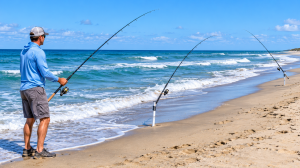
Frequently Asked Questions About Surf Fishing
What is the best time to go surf fishing?
Incoming and outgoing tides can both produce opportunities. The most productive period depends on local fish activity, water movement, weather, and the structure of the beach. Observe how fish respond to changing water levels.
Fish when the tide is moving, either coming in or going out. Dawn, dusk and the hours around a tide change are often best.
How do you catch fish on the beach as a beginner?
Start by targeting shallow troughs, sandbars, and areas close to the shoreline. Use appropriately sized hooks, fresh bait, and a sinker heavy enough to hold your presentation in position.
How do I read surf fishing spots that always hold fish?
No location holds fish all the time. However, troughs, holes, cuts, rips, and sandbar edges are promising structures because they influence fish movement and feeding opportunities.
What bait should beginners use for surf fishing?
Shrimp is a convenient starting option for many coastal species. Live shrimp, ghost shrimp, fresh shrimp, and locally available baitfish can also be effective depending on the target species.
Do I need a long rod for surf fishing?
No. A 9 to 10 foot rod covers the first and second gut well. Move up to an 11-foot rod when you want to reach past the outer bar.
Long surf rods are useful for reaching distant structures and keeping line above breakers, but shorter rods can be effective when fish feed close to shore.
Should I cast far during high tide?
Not automatically. High tide can bring fish into shallow troughs close to the shoreline. Start by checking the nearshore structure before deciding how far to cast.
What size hook should a beginner use?
A size 1 or 2 hook works for most surf fish. Go bigger only for large baits and species like sharks or big drum.
How long should I stay at one spot?
Give a hole or trough a few casts to ten minutes. If there are no bites, move along the beach.
Is casting distance important?
Accuracy matters more. Many fish feed close in, so placing the bait in a trough or gut often beats a long cast.
Conclusion: Read the Beach Before You Cast
Successful surf fishing starts with understanding where fish are likely to feed and travel. Instead of casting randomly, learn to identify sandbars, troughs, holes, points, rips, and cuts. These structures reveal deeper water, current movement, and potential feeding areas.
Combine that knowledge with suitable hooks, fresh bait, appropriate sinker weights, and a casting strategy that changes with the tide. Most importantly, remember that you do not always need the longest cast to catch fish. Some of the best opportunities may be surprisingly close to your feet.
Key Takeaways
-
- Identify sandbars and deeper troughs before choosing a casting location.
- Look for holes, points, cuts, and rips that influence fish movement.
- Choose hooks, sinkers, and bait according to your target species.
- Fish closer during suitable high-tide conditions and explore farther water when low tide exposes shallow structure.
- Practice controlled casting and match your rod to your complete fishing setup.
- Stay patient, observe changing conditions, and move when an area is unproductive.
- Read the beach before you cast: bars, troughs, holes, rips and cuts show where fish feed.
- Test three spots first: at your feet, in front of and behind the breaker, and on top of the sandbar.
- Fish moving tides and scout structure at low tide.
- Choose fresh, local bait and use small hooks with a 3 to 4 oz sinker.
- Accuracy beats distance, but long rods help you reach deeper water.
- Check your bait often and release fish carefully.
With practice, reading the surf will become second nature. Get out there, study the waves, make a few educated casts, and enjoy the process. Tight lines!
Surf fishing becomes far less intimidating once you treat the beach as a map. Spot the sandbar, trough, holes and cuts, use fresh bait on a simple high-low rig, and cast with accuracy before distance. Stay patient, change spots when bites stop, and pay attention to the tide. Your confidence, and your catch, will grow every trip.
