The Ultimate Guide of Fishing Bass for Fall Season: The Best Lures Pick
Fall is one of the best seasons on the water. Baitfish start moving, bass follow them, boat traffic drops, and you get more water to yourself.
Instead of relying entirely on the same structure that produced fish during summer, successful anglers need to follow the food.
The central idea is simple: find the bait and you will often find the bass. Thread-fin shad, gizzard shad, alewives, blueback herring, shiners, perch, and young bluegill can all influence where bass position and how aggressively they feed.
The challenge is that the patterns that worked all summer stop working.
This guide combines proven fishing bass techniques for autumn with the lures, rod setups, and line choices that put more fish in the boat, whether you fish from a boat, a kayak, or the bank.
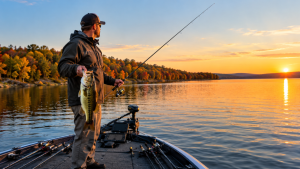
Why Fall Changes Every Fishing Bass Technique You Know
All year long, bass relate to structure: a rock pile, a main lake point, a channel swing, a spawning area.
In fall, many of those fish abandon that structure to chase baitfish.
Water temperatures drop, weather patterns shift, and water levels can fluctuate too.
The Three Core Principles of Fall Bass Fishing
- Follow the bait, not the bass.
- Fish fast until you need to slow down.
- Add flash and vibration to your lures.
Tip 1: Follow the Bait, Not the Bass
One of the biggest adjustments during the fall transition is abandoning the idea that bass must remain on the same rock piles, points, docks, or channel swings where they were caught previously. As baitfish move, bass often move with them.
Look for visible signs of forage.
Flickering bait near the surface, nervous water, diving birds, baitfish disturbances, boils, and bass breaking the surface can all reveal feeding activity. When bass are actively chasing bait balls, they can become aggressive and much easier to trigger.
Forage depends on your fishery: thread-fin shad, gizzard shad, alewives, blueback herring, shiners, perch, or juvenile bluegill. Whatever your lake holds decides how bass position and feed.
Find the baitfish and the bass are rarely far behind.
What to Look For With Your Eyes
- Nervous water: small flickers or disturbances on a slick-calm surface.
- Diving birds: loons and shad birds do not dive where there is nothing to eat.
- Boils and blow-ups: the most obvious sign of feeding bass. Scan the horizon and listen for them.
When you see bass busting bait, keep your distance, make a long cast, and put your lure into the action. Actively feeding fish are aggressive, and you can catch some of your biggest fish of the year from a school in a feeding frenzy.
Using Side Imaging to Locate Bait Balls
Boat and kayak anglers with modern electronics have a major advantage. Side imaging lets you scan hundreds of feet to each side while idling. You are looking for tight, compressed bait balls rather than sparse bait, ideally with visible lines showing bass pushing the bait. Note the depth, since baitfish are usually in the same zone across the lake, often just above the thermocline.
For boat and kayak anglers with electronics, side imaging can be extremely useful to scan large areas of water to locate bait balls and determine their depth.
Pay attention to whether baitfish are suspended at a particular depth. If concentrated bait is consistently found around a certain zone, that depth can become an important clue elsewhere in the same body of water.
- Look for tight, compressed bait balls.
- Watch for fish positioned around the bait.
- Check the depth of suspended forage.
- Search funnel areas and creek channels.
- Check main-lake and secondary points.
- Look around cover where baitfish appear pinned or compressed.
- Funnel and choke points where a main body narrows into a river arm
- Creek channel swings leading into coves and cuts
- Bait pinned against brush piles, laydowns, points, or bluff walls
A common mistake is fishing the point where you caught fish last week. If the wind shifted, the bait may have moved several points away. Start with a few casts at your old spot, set a time limit, and move on.
A scattered cloud of baitfish may not be nearly as interesting as a tight, compressed group. When bait appears corralled against a point, bluff, laydown, brush pile, or other feature, there may be a reason it is holding there. Bass can use these locations as feeding opportunities.
Tip 2: Fish Fast Until You Need to Slow Down
Fall bass school up, so you can fish 300 to 400 yards of shoreline without a bite and then catch six or eight fish in one stretch. Slow fishing with a jig or shaky head can burn a whole day on empty water. Instead, make four to ten casts, run the trolling motor high, and keep moving. Once you find active fish, slow down and pick the area apart.
Best Search Baits for Covering Water
The second major lesson is to cover water. During the fall transition, spending hours dissecting one piece of structure can be counterproductive when bass have moved several hundred yards down the bank.
A productive approach is to give an area only a few casts or a predetermined amount of time. If there is no evidence of bait or bass activity, move.
- Topwaters: walking baits and straight-retrieve baits like a Whopper Plopper, in chrome or shad colors.
- Spinnerbaits and ChatterBaits: ideal on windblown banks and secondary points.
- Square bill and mid-depth crankbaits: shad-pattern colors with chrome flash.
- Jerkbaits: pause and suspend them once fish are schooled up.
- Underspins and spybaits: swimming lures that imitate baitfish.
This strategy is especially useful for fishing bass techniques for windy days. Wind can push baitfish toward certain banks, points, and flats, creating high-percentage areas that deserve quick attention.
Fishing Bass Techniques for Windy Days
Wind can make banks and points especially interesting because it can influence where baitfish gather. Spinnerbaits, ChatterBaits, crankbaits, and other moving lures can help cover wind-blown water efficiently while producing flash and vibration.
Wind pushes bait against banks and points and makes bass less cautious. For fishing bass techniques for windy days, focus on wind-blown points with a spinnerbait or ChatterBait, and use a heavier lure you can cast accurately. Reaction baits also tell you where fish are and where they are not, so watch for fish that follow or chase a lure to the boat.
Tip 3: Add Flash and Vibration to Your Lures
Bass in fall are surrounded by thousands of real baitfish, so your lure has to stand out. Flash and vibration help fish key in on it. Glitter blades, swimbait underspins, and spinnerbaits all do this well.
Fishing Bass Techniques Using Swimbaits
Fast-moving lures are excellent search tools.
Topwaters, spinnerbaits, ChatterBaits, crankbaits, underspins, and spybaits allow an angler to cover water while simultaneously learning where fish are positioned.
A fish that follows a lure without striking is still useful information.
The bait has revealed that a bass is nearby and willing to chase.
- Make several casts.
- Move steadily along the bank.
- Watch for follows and short strikes.
- Mark productive stretches.
- Slow down only after locating fish.
For fishing bass techniques using swimbaits, match the size of the forage. If bass are eating baitfish under an inch long, a five-inch swimbait is the wrong choice.
Downsizing often catches bigger fish too. On an underspin, adjust head weight (1/8 oz to 3/8 oz) to reach the depth of the bait balls, not necessarily the bottom.
A heavier head also lets you burn the bait fast, which spotted bass and fish on herring lakes often prefer.
The key is not simply throwing an underspin but matching its head weight and swimbait size to the depth and size of the forage.
Different head weights can help keep the lure in the baitfish zone. The goal is not necessarily to drag the lure along bottom. Instead, keep it where the baitfish are concentrated.
Fishing Bass Techniques With Soft Plastics
Fishing bass techniques with soft plastics also benefit from flash. In shallow grass, use a weedless Texas-rigged flashy swimbait.
In open water, use an exposed hook for a better hook-to-land ratio. When bass relate to grass in fall, a baitfish-colored, downsized frog can be the difference between a few bites and fifteen to twenty bites a day.
The Top Fall Lures and How to Fish Them
1. Buzzbait: The Best Search Bait for October
A buzz bait is an excellent fall search bait when bass are shallow or spread across large areas. It can cover water quickly while creating surface disturbance.
A buzzbait targets shallow fish on flats, creek backs, and main-lake bluff walls. During the fall turnover, bass spread from inches of water to 30 to 50 feet, and a buzzbait lets you cover everything in front of you.
Pop your rod tip or crank the handle occasionally to splash and trigger followers. Fish it fast early in October, then slow it down as water cools. It remains a top topwater in very cold water.
Example Buzz Bait Setup
- a heavy-power casting rod, 7’1″ fast-action heavy rod, 7.1:1 reel
- Fast action for quick hooksets
- 30-pound braid in heavy-cover situations
- High-speed baitcasting reel
- Black color with a black blade, or white with a silver blade
2. Glide Bait: Big Bites in Clear Water
Glide baits can become increasingly useful as water temperatures fall, particularly in clear water. They can be especially effective around visible targets such as docks, stumps, laydowns, and grass
Glide baits shine in clear water and get better as it cools. They are target-oriented, so cast them around stumps, laydowns, grass clumps, and docks. A soft glide bait can fold when a fish eats it, which helps with hookups.
- Setup: 7’6″ heavy rod, 20 to 25 lb fluorocarbon
- Action: fast for soft glide baits, moderate for hard glide baits
Getting a target-oriented approach: cover water with a faster search bait, then switch to a glide bait when you encounter a high-percentage piece of cover
A larger profile can sometimes appeal to bass during the fall feeding period, but lure size should still reflect the local forage.
3. Spinnerbait: The Muddy Water Choice
A spinnerbait is particularly useful when water becomes muddy. In reduced visibility, bass may hold tightly to cover and rely more heavily on their lateral line and close-range sensory cues.
That makes vibration and flash valuable. Instead of relying only on long casts, work the spinnerbait close to cover and make accurate presentations around the objects bass are using.
Fishing bass techniques for muddy water starts with a spinnerbait. Strike zones shrink in stained water and bass hold tight to cover, so the vibration and blade flash help them find the bait. Pitch it into wood cover and pop the rod so the blades flutter.
Replace the trailer hook with a soft plastic trailer to fish heavier cover and help fish inhale the bait. Use 20 lb fluorocarbon around wood, since braid can dig into bark and snag.
These are important fishing bass techniques for muddy water, particularly around flooded cover, wood, grass, and shallow structure.
On the other side, square bills and deeper-running crankbaits can help cover water while imitating baitfish. Shad-oriented colors and reflective finishes fit naturally into a fall forage pattern
For anglers targeting deeper suspended fish, a deep water crankbait bass fishing rod setup should provide enough power to cast and control the crankbait while maintaining the action needed for the lure. The exact rod and line choice should be adjusted to the lure’s running depth, cover, and target species
4. Jig: Slow Down When You Find Fish
Crawfish become more active in fall, so a jig is excellent once you locate fish. Use a 3/8 oz jig most of the time. For fishing bass techniques in cold water, drop to a 1/4 oz finesse jig with a small chunk trailer, since colder water favors smaller profiles. A fast 8.1:1 reel increases the number of pitches you make in a day.
- Setup: 7’3″ fast-action medium-heavy rod, 15 to 20 lb fluorocarbon
5. Punching Heavy Vegetation
Punching with a heavy weight and 50 lb braid is a strong option when bass hide in matted vegetation.
Gear and Setup Guide for Different Situations
Best Bass Fishing Techniques Setup for Beginners
The best bass fishing techniques setup for beginners is simple: one 7-foot medium-heavy fast-action baitcasting rod, a 7.1:1 reel, and spools of 15 lb fluorocarbon and 30 lb braid. This covers buzzbaits, spinnerbaits, jigs, and soft plastics.
Deep Water Crankbait Bass Fishing Rod Setup
For a deep water crankbait bass fishing rod setup, use a longer rod with a moderate or parabolic action to cast far and keep the treble hooks pinned, paired with 10 to 15 lb fluorocarbon so the bait runs deeper. Use a slower reel for steady cranking.
Fishing Bass Techniques With a Drop Shot Rig
Fishing bass techniques with a drop shot rig fits the moment you find fish and they stop chasing fast baits. Hold the boat over them and finesse a small plastic just off the bottom.
A drop shot can become useful after active fish have been located and stop responding to faster-moving presentations. Rather than beginning a fall day by slowly dissecting every piece of structure, use faster lures to locate fish first and then consider finesse techniques when necessary.
Applying These Techniques Everywhere You Fish
Fishing Bass Techniques From Shore
For fishing bass techniques from shore, keep moving. Cast a buzzbait or spinnerbait along the bank, work riprap, docks, and points, and slow down with a jig only after you get a bite.
Bank anglers can apply the same fundamental principle: locate the food. Focus on wind-blown banks, points, creek mouths, shallow flats, and areas where baitfish are visible. Since you cannot scan large sections with a boat’s side imaging, observation becomes even more important
Fishing Bass Techniques for Small Ponds
Fishing bass techniques for small ponds rewards stealth. Use lighter line, make quiet casts, and pick lure sizes that match local forage.
In small ponds, baitfish movement may be easier to observe because the available habitat is limited. Cover water with a search bait, watch for surface activity, and pay attention to areas where wind concentrates forage.
Fishing Bass Techniques for Tournament Anglers
Fishing bass techniques for tournament anglers means setting time limits, running search baits first, and using electronics to find bait before committing to a pattern.
These principles are particularly relevant to fishing bass techniques for tournament anglers. Tournament conditions reward efficient decision-making. Spending less time on unproductive water creates more opportunities to locate active schools.
The main point is to search, observe, locate bait, identify bass activity, then slow down and exploit the productive area
Night Fishing Bass Techniques
Night fishing bass techniques favor dark buzzbaits and spinnerbaits fished slowly near cover, which suits cooling water.
Night fishing requires a different emphasis because visual baitfish signals become less useful. Bass may respond strongly to vibration and water displacement, making moving lures such as spinnerbaits, buzz baits, and other high-profile presentations useful starting points.
Best Lures for Fishing Bass Techniques in Spring
The best lures for fishing bass techniques in spring include jerkbaits, jigs, and soft plastics near spawning areas. Many fall lessons, such as covering water and matching forage, still apply.
How Beginners Can Build a Simple Bass Setup
For anglers developing the best bass fishing techniques setup for beginners, avoid carrying dozens of specialized presentations before learning how to locate fish.
- Start with a versatile casting or spinning setup.
- Carry a moving search bait.
- Add a soft plastic for slower presentations.
- Include a crankbait or spinnerbait.
- Learn to identify baitfish activity.
- Practice changing speed and depth.
The biggest improvement often comes from learning when to move rather than simply buying another lure.
Frequently Asked Questions
What is the best lure for fall bass fishing?
A buzzbait is a strong choice in October, with spinnerbaits, glide baits, jigs, and underspins close behind depending on water clarity and temperature.
Should I fish fast or slow in fall?
Fish fast to find active schools, then slow down with a jig or finesse bait once you locate them.
Slow down after you locate productive water or when faster search baits stop generating activity. Finesse presentations can then help catch fish that are less aggressive.
What line should I use for spinnerbaits around wood?
Use 20 lb fluorocarbon, which slides over wood better than braid.
How do I find baitfish on the lake?
Look for nervous water, diving birds, and boils, and scan with side imaging for tight bait balls.
What is the most important fall bass fishing technique?
Follow the baitfish rather than relying entirely on historical bass locations. As forage moves, bass often move with it.
How fast should I fish for fall bass?
Start quickly enough to cover water and locate active fish. Once you find bass, bait, or signs of feeding activity, slow down and make more targeted casts.
What lure works well in muddy water?
It is spinnerbaits because they combine flash and vibration and can be worked close to cover where bass may be holding.
Should I use a large swimbait in fall?
Not automatically. Match your swimbait to the size of the forage bass are actively feeding on. Downsizing can sometimes produce more bites.
Why are bait balls important?
Tight bait balls can indicate concentrated forage and potentially active feeding opportunities. Electronics and visual observation can help identify these locations.
Conclusion
Fall rewards anglers who adapt. Follow the bait, fish fast to find active schools, add flash, and slow down only when you have found fish. With the right lures, rods, and line, these fishing bass techniques work from a boat, a kayak, or the bank.
The most valuable lesson from these fishing bass techniques is that fall bass fishing is about movement and adaptation. Baitfish move, bass follow, and successful anglers adjust with them.
Look for bait. Watch the surface. Scan the water column. Cover ground with efficient search baits, and pay attention to every follow, strike, boil, and baitfish disturbance.
Once you find concentrated forage and active bass, slow down and capitalize on the opportunity. Whether you’re fishing a large reservoir, a small pond, from shore, or from a boat, the same basic principle remains: find the food, match the presentation, and keep moving until you locate active fish.
Key Takeaways
- Find baitfish first; the bass will be nearby.
- Set time and cast limits and keep moving.
- Use flash and vibration to stand out from natural forage.
- Match lure size to the baitfish in your lake.
- Use spinnerbaits in muddy water and glide baits in clear water.
- Switch to fluorocarbon around wood and to smaller jigs in cold water.
- Follow the bait: Bass often move with their food during the fall transition.
- Use your eyes: Watch for nervous water, birds, boils, and baitfish.
- Use electronics: Side imaging can reveal bait balls and their depth.
- Cover water: Do not spend hours on an area without evidence of fish.
- Use search baits: Buzz baits, spinnerbaits, crankbaits, ChatterBaits, and underspins help locate active fish.
- Add flash: Flash and vibration can help your lure stand out among real baitfish.
- Match forage size: Downsize when bass are feeding on tiny baitfish.
- Slow down strategically: Once you locate fish, switch to more targeted or finesse presentations when necessary.
