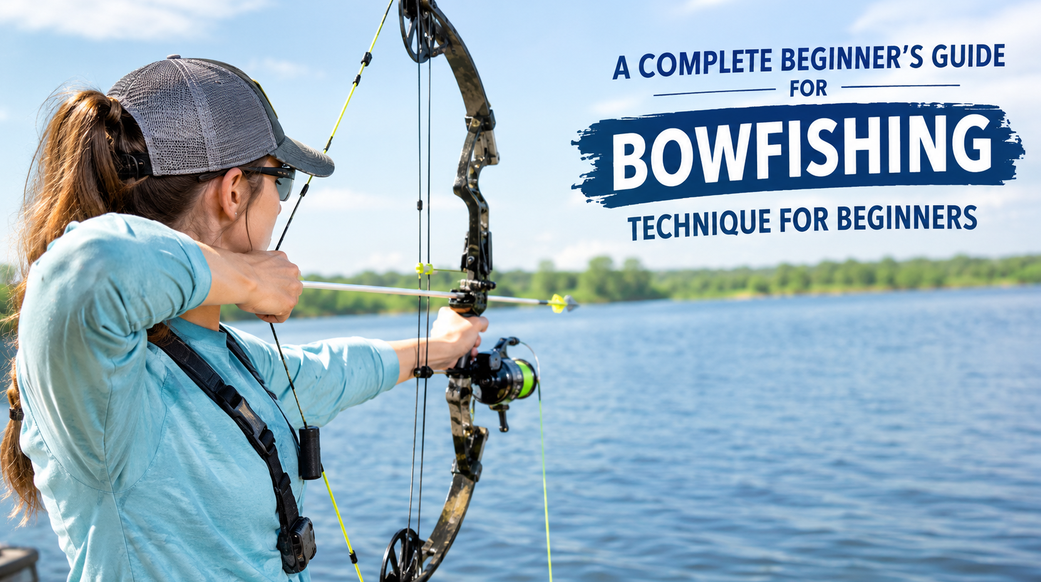
How to Master Snap Shooting Bowfishing Technique: Aim, Gear & Carp Tips
Bowfishing combines archery, fishing, and outdoor adventure into one challenging activity. You spot a fish, judge the light, release the arrow and land your catch. Every step is harder than it looks.
Unlike conventional fishing, where anglers use bait and hooks, bowfishing involves shooting specially designed arrows attached to retrieval lines to catch fish in the water.
With the right equipment, patience, and practice, beginners can learn to spot fish, aim accurately, and retrieve their catch successfully.
One of the most popular targets is carp, including invasive Asian carp species in regions where harvesting them is permitted. These fish can negatively affect native ecosystems, making responsible bowfishing a useful management tool in certain areas. Harvested fish can also provide food when the species is safe and legal to consume.
This complete bowfishing guide explains the essential equipment, fish-finding strategies, aiming fundamentals, and practical bowfishing technique for beginners.
This guide pulls together lessons from experienced bowfishers who target carp, gar and other rough fish. It covers the gear, the aim and the field skills that turn a frustrating first trip into a full stringer
Whether you plan to fish from the shore, a kayak, or a boat, understanding the basics will help you develop confidence and consistency.
Why Bowfishing Is Worth Learning
Carp were introduced to America more than a century ago and are widely considered a destructive invasive species. They uproot habitat and compete with native fish for food. Many bowfishers eat what they shoot, and carp recipes are common in several food traditions.
Others see the sport as a way to help the water. Either way, respect the resource. Use the fish or dispose of it properly, because leaving piles of dead fish on the bank is illegal in many states.
Check Regulations First
- Call your local conservation or fish and game office to confirm where bowfishing is allowed.
- Know which species are legal. Rough fish such as carp, gar, bullhead and sheepshead are typical targets.
- Never shoot protected game fish such as walleye or crappie. That is illegal.
Gear Basics for Bowfishing Technique for Beginners
A solid bowfishing technique for beginners starts with simple, durable equipment. You do not need the priciest kit. A used bow in good shape can cost around forty dollars, as long as the draw length and poundage fit you. Keep in mind that cheaper gear breaks sooner, so carry spares.
1. Choose the Right Bowfishing Equipment
A successful bowfishing setup begins with a suitable bow, a reliable retrieval reel, a specialized arrow, and a strong arrow rest. Every component must work together because bowfishing arrows are heavier than ordinary target arrows and require dedicated fishing equipment.
Compound Bows vs. Recurve Bows
1. Compound bows are popular because their let-off allows archers to hold at full draw with less effort. This can be useful when waiting for a fish to move into a suitable position without making sudden movements that might scare it away.
Moreover, a compound bow lets you hold at full draw for a long time. That helps when a spooky fish needs a moment to settle. A 60-pound draw weight is a common choice. It is strong enough for hunting season but not so strong that it destroys arrows in the water. Whatever bow you pick, a stabilizer mount is worth having
2. Recurve bows are another practical option. They are generally simple, lightweight, and straightforward to maintain. Their uncomplicated design makes them appealing to beginners who want a basic setup without complicated accessories.
On the other words, recurve bows are simple, light and easy to maintain, and many shooters start on one. A good recurve bow setup for bowfishing target shooting means a solid reel mount and a sturdy rest.
Spend time on practice shots at floating sticks or leaves before you hunt. The bowfishing technique with a recurve bow favors close shots and instinctive aiming, so repetition matters more than any accessory
A suitable bowfishing technique with a recurve bow starts with selecting an appropriate draw weight, practicing controlled shooting, and learning to aim instinctively.
For a recurve bow setup for bowfishing target shooting, use a bow that fits your draw length and physical ability, together with a compatible fishing reel, reinforced arrow rest, and purpose-built bowfishing arrows.
Always follow the bow manufacturer’s specifications and have an experienced archery technician check equipment compatibility.
Bowfishing Reels and Retrieval Systems
There are two common reel styles: traditional drum reels and bottle-style or spincast-style retrieval systems.
- Drum or hand-wrap reels: Simple designs with few moving parts and cheap. They can be economical and easy to maintain, although retrieving arrows and fish may take longer. The downside is slower retrieval of missed arrows and fish
- Bottle reels: Enclose the line in a compact housing and typically provide controlled line release and retrieval. All you will do is to push a release button, let the line fly, then crank it in like a spinning reel. They typically hold 20 to 50 yards of heavy line
- Heavy-duty spincast reels or Open spool reels: Offer familiar controls and convenient retrieval when specifically designed or rated for bowfishing. Open spool reel is an old-school choice for close shooting. Some bowfishers feel they hurt accuracy because line peels off the big spool
A reliable bowfishing reel setup for fast snap shooting should allow the line to release freely while keeping the retrieval system secure and properly aligned. Practice operating the reel’s release mechanism before approaching fish, and check that the line is attached correctly every time.
The line must be strong enough for the intended fish and compatible with the reel, arrow, and retrieval system. Follow the manufacturer’s recommended line specifications instead of assuming that a particular breaking strength suits every setup.
Arrows, Arrow Tips, and Rests
Bowfishing arrows are usually made from solid fiberglass or a fiberglass-based composite. They are designed to withstand repeated use in water and carry specialized barbed tips that help retain fish during retrieval.
Bright colors are easier to find if you lose one in the water. Always use an arrow with a pre-installed slider. It keeps the line in front of the bow so it does not tangle on you, the bow or the arrow. Tie a fresh knot at the start of each trip, and double-loop it when you target big fish
Also, look for arrows with a properly installed safety slide, secure bumpers, and compatible tips. The slide helps keep the line in front of the bow during release, reducing the risk of dangerous tangles.
Common arrow-tip styles include reversible-barb tips, tournament-style tips, and specialized non-twisting tips. The correct choice depends on the target species and the manufacturer’s recommendations.
For anglers researching best bowfishing arrow rests for quick shooting, a strong, purpose-built bowfishing rest is a sensible starting point. Ordinary hunting rests may not adequately support heavy fishing arrows. Some whisker-style rests can also wear or fail if they are not designed for the load.
Additionally, target and hunting rests are often too light for heavy fiberglass arrows.
A whisker biscuit that is not stiff enough can let the arrow punch straight through the bristles. Heavy-duty rests designed for fishing arrows hold the shaft securely.
They are the best bowfishing arrow rests for quick shooting because the arrow stays seated while you draw and release fast
Bowfishing Arrow Tips for Gar
When choosing bowfishing arrow tips for gar, consider a model specifically rated for the species and compatible with your arrow.
Gar have tough, armor-like scales, so shot placement, adequate penetration, and secure retention matter.
A gar bowfishing aim technique and tip selection should prioritize a clearly identified legal target, appropriate equipment, and a safe shot rather than simply choosing the heaviest tip.
On the other side, reversible barb tips are the most common and make fish removal easy. Tournament-style tips add weight for penetration.
A tip with a steel collar and non-twisting design suits tough, thick-skinned fish. For armored fish, bowfishing arrow tips for gar should be heavy and strong, because gar scales resist poor penetration.
This gar bowfishing aim technique and tip selection advice is simple: aim for the body just behind the head, and use a barbed, collared tip that locks in and does not spin free
2. Find Productive Bowfishing Locations
Finding fish is often more challenging than taking the shot. Successful anglers learn to read the water, identify likely fish habitats, and approach quietly.
Polarized sunglasses are essential because they cut surface glare so you can see into the water. If you cannot see the fish, you cannot shoot it.
At night, a bright light of 600 lumens or more helps, and many bowfishers use a halogen spotlight
Look for Shallow, Calm Water
Shallow areas near vegetation, submerged structures, riverbanks, and wetland channels can attract fish. Carp may feed near the bottom or move into shallow water during suitable seasonal conditions. Silver and bighead carp may also be visible near the surface when feeding.
Well, this is a natural underwater formation described as a rock block. Such structures can funnel fish through a relatively narrow passage, creating a natural travel corridor.
For bowfishing carp techniques in shallow mud flats, scan calm water for dark moving shapes, feeding rings, and brief flashes beneath the surface. Polarized sunglasses can reduce glare and improve visibility during daylight.
If visibility is poor, slow down and observe the water before taking a shot. Never shoot at an uncertain shape. Turtles, protected fish, and swimming birds can create misleading movements in murky water.
Telltale Signs of Carp
- A dark submarine-like shape rising or sinking slowly.
- Pulsing concentric rings from feeding fish.
- A long dark sliver, which is the top of the fish’s back.
- “Ghosting,” a quick silvery flash under the surface.
Identify your target with 100 percent certainty. Turtles, waterfowl and non-target fish can all create shapes and flashes that look like carp.
Approach Quietly and Choose the Right Conditions
Carp can be sensitive to sudden movements, heavy footsteps, and changes in their surroundings. Wear clothing that blends into the environment, move slowly, and avoid casting a conspicuous silhouette against the sky.
Bright, sunny days with little wind often improve visibility. Early morning and evening can also be productive, while deeper, cooler water may offer better conditions during hot midday periods.
A bank bowfishing techniques for beginners without a boat approach should focus on accessible shorelines, quiet footwork, safe footing, and unobstructed shooting lanes. A canoe or kayak can also help anglers move quietly when local regulations permit bowfishing from the vessel.
For bowfishing from a boat technique, keep the boat stable, coordinate movements with everyone aboard, and ensure that the shooting area is clear. Never shoot from an unstable position or toward people, buildings, roads, or other hazards.
3. Master the Bowfishing Aiming Technique
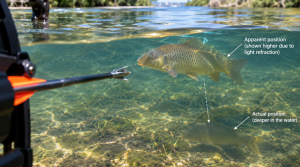
One of the biggest challenges for beginners is understanding how light refraction affects a fish’s apparent position underwater.
This is where most beginners lose fish. Water bends light, so a fish looks shallower and closer to the surface than it really is. Always aim lower than you think
Why You Must Aim Low
When light passes from water into air, it changes direction. This refraction makes an underwater fish appear closer to the surface than it really is. If you aim directly at the fish’s apparent location, your arrow may pass above it.
The fundamental bowfishing aiming technique is therefore to aim below the fish’s apparent position. The amount of adjustment depends on water depth, shooting angle, distance, and conditions.
If you’re learning how to compensate for refraction bowfishing, begin with supervised practice at a legal, safe target range over water. Observe where your arrows land and make small, consistent adjustments.
The bowfishing refraction technique is not a single fixed measurement. A fish deeper in the water generally requires a different correction from one close to the surface. Steeper shooting angles also change the apparent displacement.
The bowfishing aiming technique boils down to one rule: aim low.
Here is how to aim when bowfishing and handle the bowfishing refraction technique in practice:
- Pick the exact spot on the fish’s body you want to hit.
- Drop your point of aim below that spot. The steeper the angle, the more you need to drop.
- Stay low and steady and follow through after release.
- Adjust after each shot based on where the arrow landed.
Many compound shooters use a 20-yard pin for typical close shots, then adjust. If you want to learn how to compensate for refraction bowfishing reliably, practice on floating debris at varied depths. Once you know your own offset, you will hit consistently.
Aiming Without a Sight
Many pros shoot instinctively with no sight.
Here is how to aim bowfishing without a sight: look at the fish, not the arrow, and let your hand-eye coordination do the work after hundreds of practice shots. Instinctive aiming is fast and works well with recurves and lever-style bows
Many bowfishers shoot instinctively without a conventional bow sight because fish can move quickly and shooting angles frequently change.
Learning how to aim bowfishing without a sight requires repetition. Practice controlled shots at appropriate floating targets in a safe area, and record how your point of aim relates to where the arrow actually lands.
Bowfishing Snap Shooting Technique Step by Step
For a bowfishing snap shooting technique step by step, use this sequence:
- Identify the target and confirm that it is a legal species.
- Check the background, water depth, shooting lane, and position of everyone nearby.
- Establish a stable stance and bring the bow under control.
- Draw smoothly without allowing the arrow or line to snag.
- Apply the appropriate downward aiming correction for refraction.
- Release only when the target is clearly identified and the shot is safe.
- Retrieve the arrow and fish using controlled line pressure.
Snap shooting should never mean shooting blindly or rushing an uncertain shot. Consistency and target identification are more important than speed.
Shallow and Deep Water Adjustments
A shallow water bowfishing technique emphasizes close observation, short controlled shots, and careful attention to submerged obstacles. Mud, rocks, and clay can damage arrow tips or make retrieval difficult.
For deep water bowfishing aim adjustments, expect the fish’s apparent position to differ more noticeably from its actual position, depending on the viewing angle. Learn your equipment’s behavior through controlled practice rather than relying on a universal aiming formula.
If you’re exploring a bowfishing technique for moving fish in murky water, patience is essential. Wait until the fish’s direction and location are clear enough to make a responsible shot. Never compensate for poor visibility by shooting at uncertain movement.
The deeper the fish, the larger the refraction error.
Deep water bowfishing aim adjustments mean aiming lower for deeper targets, getting as close as you safely can, and shooting from a steeper angle when possible. Deep, cooler water also becomes your hunting ground at midday when the sun is high
4. Adapt Your Approach to Different Fish
Different species require different equipment choices, aiming considerations, and handling procedures.
Carp and Asian Carp
Carp are common bowfishing targets in many areas. Look for feeding activity, movement near vegetation, and fish traveling through shallow channels.
The most productive season varies by region, but late spring and summer may bring some species into shallow water for feeding or spawning. Local water conditions and seasonal regulations should guide your plans.
Gar and Other Thick-Skinned Fish
Gar require particular care when selecting equipment and planning a shot. Use a compatible, species-appropriate arrow tip and avoid taking shots that offer poor penetration or uncertain retention.
Night Bowfishing
Night fishing can improve visibility when a suitable spotlight illuminates stained water. Move lights slowly and avoid sudden movements that may disturb fish.
For night bowfishing stealth techniques for big drum, use quiet movement, stable footing, and controlled lighting while complying with local rules governing artificial lights and target species. Big drum and other fish should only be targeted where bowfishing is legal.
5. Safety, Fish Handling, and Responsible Harvesting
Safety should be part of every bowfishing session. A bowfishing arrow is attached to a line, and poor line management can create serious hazards.
- Use a proper safety slide and check the arrow-line connection before every shot.
- Keep fingers and clothing clear of the line’s path.
- Never point a loaded bow toward people or an unsafe background.
- Wear suitable footwear for mud, rocks, and slippery shorelines.
- Protect electronics and valuables in waterproof bags.
- Bring drinking water, sunscreen, insect repellent, and suitable lighting when needed.
- Carry a first-aid kit and wear a properly fitted life jacket when boating.
After shooting a fish, maintain controlled tension and retrieve it without sudden, excessive pulling. Keep the arrow secured while the fish is being handled; do not allow a struggling fish to tangle the line.
Follow humane dispatch and fish-handling practices appropriate to the species. If you intend to eat your catch, process it promptly and keep the meat properly chilled. Never assume every fish from a particular waterway is safe to eat; check local consumption advisories.
Before leaving, learn the local regulations for bowfishing seasons, licenses, permitted species, equipment, and disposal of harvested invasive fish. Never leave piles of dead fish along the shoreline. Use legal disposal methods or utilize the catch when safe and appropriate.
6. Field Conditions and Situations Tips
Shallow Water Bowfishing Technique
The shallow water bowfishing technique is the easiest place for beginners to start. Refraction error is small, and fish are closer. Move slowly and wait. Grass carp and silver carp often feed in the shallows, sometimes right on the surface.
Bowfishing Carp Techniques in Shallow Mud Flats
Muddy flats call for patience. Bowfishing carp techniques in shallow mud flats rely on watching for tail swirls, back slivers and feeding rings. Take your time, and wait for fish to resume feeding after any disturbance.
Bowfishing Technique for Moving Fish in Murky Water
Use a bowfishing technique for moving fish in murky water that leads the target slightly in the direction it is traveling. Aim low, and lead the visible shape or the swirl. In very stained water, consider night shooting with a bright light.
Bank Bowfishing Techniques for Beginners Without a Boat
You do not need a boat. Bank bowfishing techniques for beginners without a boat mean walking the shoreline quietly, wearing earth-tone or camouflage clothing, and shooting from a rock or point with a wide view. Look for natural funnels such as rock blocks, culverts and shallow channels where fish travel. Spring spawning runs bring carp into shallow areas where you can see them in daylight.
Bowfishing From a Boat Technique
The bowfishing from a boat technique adds mobility but also noise. A canoe or kayak lets you glide quietly over schools of carp. In a larger boat, keep movement and footfalls minimal. Choose a clothing color that blends with the sky or water instead of the woods.
Night Bowfishing Stealth Techniques for Big Drum
Fish react to fast-moving light. For night bowfishing stealth techniques for big drum, keep your light steady, lower your noise and approach slowly. A lighted nock helps you track the arrow’s path. Wait for the fish to settle before drawing.
Safety, Etiquette and Pro BowfishersTips
- Carry a fish club and sharp knife, and bleed fish promptly for better table quality.
- Bring spare arrows, nocks and tips. Rocks dull and break them.
- Put your phone and wallet in a waterproof bag.
- Wear sunscreen, long sleeves and bug protection.
- Never let go of the arrow while a fish is thrashing, because your line will tangle.
Frequently Asked Questions
1. Is bowfishing suitable for beginners?
Yes. Beginners can start with a compatible bowfishing kit, proper instruction, and supervised practice. Learning safe line management and refraction correction is essential before attempting to shoot fish.
2. Do I need a special bow for bowfishing?
A compound bow, recurve bow, or suitable longbow may work when properly configured for bowfishing. The bow must be compatible with the fishing reel, arrow rest, and heavy bowfishing arrows.
3. Why do bowfishers aim below the fish?
Refraction makes underwater fish appear shallower than their actual position. Aiming below the visible fish helps compensate for this optical effect, although the precise correction varies with depth and shooting angle.
4. Can you bowfish from the bank?
Yes, where regulations allow it. Shore anglers should approach quietly, choose stable footing, and make sure the entire shooting area is safe and unobstructed.
5. What is the best time for bowfishing?
Bright, calm conditions can improve daytime visibility. Early morning, evening, and night can also be productive depending on the species, water clarity, season, and local regulations.
6. What equipment matters most for accurate bowfishing?
A suitable bow, a compatible reel, a purpose-built arrow with a safety slide, a durable arrow rest, and polarized sunglasses for daytime use are key components. Practice is essential for consistent results.
7. How do I aim when bowfishing?
Aim below where the fish appears. Refraction makes it look shallower than it is. The deeper the fish, the lower you aim.
8. What is the best bow for beginners?
A used compound or recurve that fits your draw length and weight is a low-cost start. Combo kits bundle everything you need.
9. Do I need a sight?
No. Many shooters prefer instinctive aiming. A sight helps beginners by providing a consistent reference.
10. What fish can I shoot?
Typically carp, gar, bullhead and sheepshead. Check local laws, and never shoot protected game fish.
11. Can I bowfish without a boat?
Yes. Shore and bank bowfishing works well in shallow water, especially during the spawn.
Conclusion
Learning an effective bowfishing technique takes time, patience, and consistent practice. Start by choosing compatible equipment, understanding how your retrieval system works, and learning to identify fish in suitable locations. Polarized sunglasses, quiet movement, and awareness of underwater structures can significantly improve your ability to spot targets.
Remember the most important aiming principle: underwater refraction generally means aiming below the fish’s apparent position. Practice with safe targets to learn the correction that works for your shooting angle and equipment.
Most importantly, put safety and responsible harvesting first. Check local regulations, identify every target clearly, manage your arrow line carefully, and dispose of harvested fish properly. With these fundamentals in place, beginners can build the skills needed for safer, more effective, and more rewarding bowfishing adventures.
Key Takeaways
- Always aim low to correct for refraction.
- Use polarized sunglasses so you can see the fish.
- Choose a sturdy rest, a slider-equipped arrow and a reliable reel.
- Match arrow tips to your target, especially for gar.
- Stay stealthy: move slowly, blend in and keep lights steady at night.
- Practice often, and always carry spares.
Good bowfishing technique comes down to preparation, patience and repetition. Choose gear built for the job, learn to read the water, aim low, and keep practicing. Every missed arrow teaches you something about light and depth. Stay safe, follow your local rules and enjoy the chase
