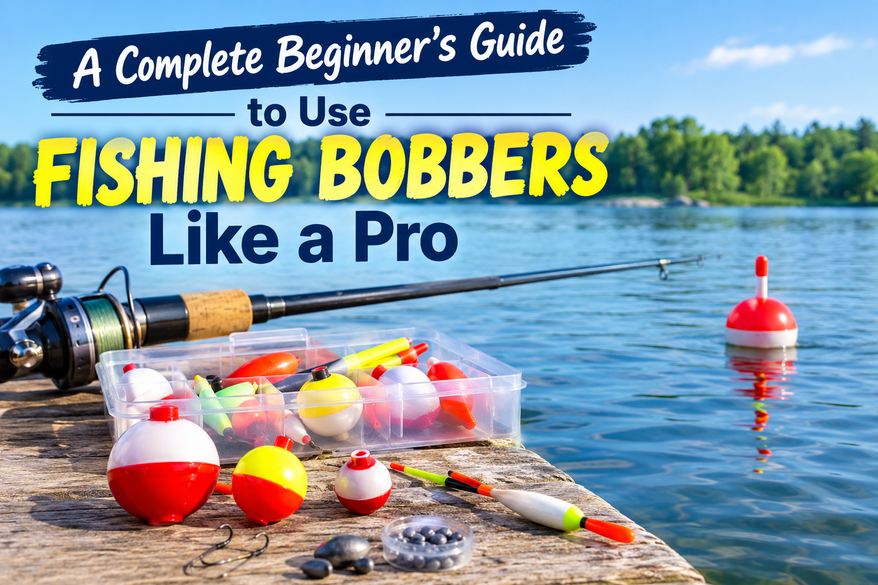
Types of Fishing Bobbers and How to Use Them Like a Pro
Fishing with a bobber is easy and incredibly effective, which is why it is often the first technique new anglers learn. Whether you’re targeting bluegill near the shoreline, crappie around submerged brush, or walleye in deeper water, using the right bobber helps keep your bait at the correct depth while making bites easier to detect. Watching a bobber dip, twitch, or disappear beneath the surface is also one of the most exciting parts of fishing.
However, not all bobbers work the same way. Different shapes, sizes, materials and attachment systems serve different purposes. Some are ideal for lightweight panfish rigs, while others allow you to fish several feet below the surface without sacrificing casting distance.
In this beginner’s guide, we’ll explore fishing bobber types and uses, explain how to rig common floats, and show you how to choose the right setup for different fishing conditions. With a few basic components and some practice, you can build an effective bobber rig for many freshwater fishing situations.
Why Use a Fishing Bobber?
A fishing bobber, also called a float, suspends your bait at a chosen depth instead of letting it sink directly to the bottom. This is particularly useful when fish feed in the middle of the water column, as bluegill and crappie often do.
Using bobbers matters for schooling fish like bluegill and crappie, which often hold in the middle of the water column.
- Suspends bait at the depth where fish are feeding.
- Keeps your hook off the bottom, away from snags and rocks.
- Improves visibility so you can see where your line is.
- Signals strikes when it twitches, tilts or disappears.
Some people think a float rig is only for kids. It isn’t. Anglers at every level use float systems, and everything from panfish to sharks can be caught on them.
Bobbers also provide a visible indication of fish activity. A float might dip, tilt, twitch, or disappear underwater when a fish takes your bait. This visual feedback helps beginners recognize bites without constantly watching their fishing line.
Other advantages include:
- Depth control: Keep live bait or a jig at a productive feeding level.
- Fewer snags: Suspend your hook above weeds, rocks, and submerged wood.
- Improved visibility: Follow your bait and detect subtle strikes.
- Versatility: Fish for panfish, trout, bass, walleye, and other species.
- Better presentation: Allow bait to drift naturally through likely feeding areas.
Common Types of Fishing Bobbers
1. Round Clip-On Bobbers
Round clip-on bobbers are a popular choice for beginners because they’re inexpensive, easy to attach, and simple to adjust. Most feature a plastic body with a spring-loaded mechanism that exposes hooks or attachment points at the top and bottom.
To learn how to attach clip on bobber for bluegill, press the stem to expose the first hook, place your fishing line underneath it, and release the stem. Press the opposite attachment point to expose the second hook and secure the line there as well. The bobber should sit firmly on the line without sliding freely.
Alternatively, you can use a small cigar or round snap float. Wrap the line, add a light hook and a small weight, and you are set.
These floats work well with small hooks, worms, insect larvae, and lightweight jigs. They’re particularly useful when fishing from docks, ponds, and shorelines.
2. Spring Bobbers
Spring bobbers use a spring mechanism to hold the fishing line in a notch. They’re commonly made from plastic, foam, or balsa wood and are useful for fishing with lightweight tackle.
Spring floats come in different shapes. Rounder models generally provide more buoyancy for heavier bait, while longer, slimmer floats can make subtle movements easier to notice. Taller stems also improve visibility in waves or moving water.
For anglers wondering how to rig spring bobbers for bluegill, the process is straightforward:
- Tie a small panfish hook to your fishing line.
- Attach a small split-shot weight approximately 3–6 inches above the hook.
- Pull the spring mechanism back to expose the bobber’s line notch.
- Place the fishing line inside the notch and release the spring.
- Adjust the bobber to position your bait at the desired depth.
A starting depth of around 2 feet can work in shallow water, but adjust it according to weed growth, water clarity, and where fish are feeding.
If the bobber slides during casting, wrap the line around its notch once or twice, provided the design allows it. This helps keep the float in position.
3. Slip Bobbers
Slip bobbers are especially useful when fishing deep water. Unlike fixed bobbers, they allow the fishing line to slide through the float until it reaches a bobber stop positioned higher on the line.
This arrangement allows you to fish at depths of 8 feet, 12 feet, or even deeper while keeping the line relatively short between the rod tip and the rig during casting. That makes casting easier and reduces tangles compared with using a fixed bobber at the same depth.
A slip float is an excellent choice for suspended crappie, walleye near underwater structure, and other fish feeding well below the surface.
4. Pencil and Cigar Bobbers
Pencil and cigar bobbers have elongated bodies that can provide good casting performance. Some models are weighted, helping anglers cast farther or present bait in particular conditions.
These floats can be useful when targeting trout, perch, and other fish with relatively light tackle. Their shape may also make subtle changes in movement easier to recognize.
When comparing round vs oval fishing bobbers, remember that shape alone doesn’t determine performance. Buoyancy, total size, material, and weight rating all matter. Rounder floats often provide greater buoyancy, while elongated models can offer useful visibility and casting characteristics.
5. Peg and Lightweight Snap Floats
Peg bobbers are lightweight floats that attach to the line using a simple pegging mechanism. They’re useful when you don’t need much additional casting weight, such as when fishing for bluegill close to shore.
Weighted snap floats are designed to help improve casting distance and balance the rig. When attaching a weighted cigar-style float, position its weighted end as directed by the manufacturer so it sits correctly in the water.
6. Glow and Night Fishing Bobbers
Bright fluorescent and glow-in-the-dark bobbers make it easier to track your line in low-light conditions. They’re useful for evening and nighttime fishing, when detecting subtle movements against a dark background can be difficult.
Choose a float that remains visible without being unnecessarily large for your tackle. A properly balanced setup can help you identify bites while keeping resistance manageable.
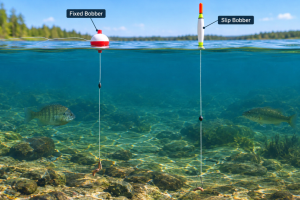
Slip Bobber vs. Fixed Bobber: Which Is Better?
The main difference in a slip bobber vs fixed bobber setup is how the float attaches to the fishing line.
- Fixed bobbers: Stay in one position on the line and work well in shallow water.
- Slip bobbers: Allow the line to travel through the float until it reaches an adjustable stop, making them more convenient for deeper fishing.
Fixed bobbers are usually easier for beginners to set up. Slip bobbers require a few extra components but provide more flexibility when fish hold at greater depths.
Choose a fixed float for shallow ponds and short casts. Consider a slip float when fishing deep lakes, submerged structure, or areas where a long section of line below a fixed bobber would make casting difficult.
How to Set Up a Slip Bobber
Learning how to set up a slip bobber takes only a few minutes once you understand the order of the components. You’ll generally need a slip bobber stop, a small bead, a compatible slip float, a split-shot weight, and a hook or jig.
Step-by-Step Slip Bobber Rigging
- Install the bobber stop: Thread your main line through the stop’s installation loop or follow the supplied instructions. Slide the stop onto the line and tighten it securely.
- Add a bead: Place a small bead below the stop. It prevents the stop from slipping into the float’s opening.
- Thread on the float: Pass the line through the top of the slip bobber and out through the bottom.
- Attach a hook or jig: Tie on a suitable hook or jig for your target species.
- Add a split shot: Place a small weight approximately 10–12 inches above the hook as a starting point. Adjust the weight to balance the float and control the bait’s descent.
- Set the depth: Slide the bobber stop to the position that corresponds to your intended fishing depth.
- Test the rig: Lower it into shallow water if possible and check that the float sits properly without being pulled completely underwater by the tackle.
The bobber stop determines how far the bait travels below the float. When the rig enters the water, the line slides through the bobber until the stop reaches the bead and float.
Slip Bobber Depth Setting for Deep Water
For a slip bobber depth setting for deep water, begin by estimating the depth where fish are feeding. If fish appear to be holding around 10 feet below the surface, start with a similar bait depth and adjust after testing the presentation.
Remember that the stop controls the distance between the float and the terminal tackle, not necessarily the bait’s exact position above the lake bottom. Current, line angle, weight, and bait movement can affect the actual presentation.
When fishing near the bottom, avoid setting the rig so deep that the hook or weight repeatedly catches on submerged obstacles.
Choosing the Right Bobber Size and Shape
Understanding how to choose a fishing bobber size helps improve casting, presentation, and bite detection. The float needs enough buoyancy to support the hook, bait, and weight without creating excessive resistance.
What Size Bobber Should You Use for Panfish?
If you’re wondering what size bobber to use for panfish, start with a small, sensitive float that matches your hook, bait, and split shot. Bluegill and other small sunfish generally don’t require the large, highly buoyant floats used with heavier bait.
A float that’s too large may resist movement when a fish takes the bait. An undersized float, however, may struggle to support the weight and remain visible.
Use these general guidelines:
- Small panfish: Choose a small fixed or spring bobber with light tackle.
- Crappie: Use a sensitive float or slip bobber matched to your jig or minnow.
- Trout: Select a compact float for light presentations or a suitable drift float for moving water.
- Walleye: Use a slip bobber with sufficient buoyancy for your live bait and weight.
- Catfish: Choose a more buoyant float when presenting larger bait, while ensuring the fish can move it without excessive resistance.
Always check the float’s weight rating where one is provided, and test the complete rig before fishing.
How Far from the Hook Should You Put a Bobber?
The answer to how far from the hook to put a bobber depends on where fish are feeding. With a fixed bobber, the distance between the float and hook determines how deep the bait hangs. With a slip bobber, the stop controls that depth.
For shallow-water panfish, begin with a short distance and adjust until the bait sits above weeds or near the depth where you see fish. In deeper water, a slip bobber makes it easier to position bait several feet below the surface.
Also consider where you place the split shot. A small weight approximately 3–6 inches above the hook is a useful starting point for a simple spring-bobber panfish rig. For other setups, a distance of 10–12 inches may be more appropriate. Adjust based on bait movement and the float’s balance.
Additionally, you can start at 2 to 3 feet for shallow water, such as the edge of lily pads. Move it deeper until you find where the fish are holding.
How to Use a Bobber with Live Bait
Bobbers work well with worms, minnows, insect larvae, and other live bait. The key is to keep the bait at a productive depth while allowing it to move naturally.
For bluegill, thread a small piece of worm onto a light hook. Avoid leaving a long section dangling from the hook, as small fish may repeatedly peck at the exposed bait without taking the hook properly.
For crappie and walleye, a minnow beneath a slip bobber can be effective when fish are suspended over deeper structure. Use enough weight to help the bait reach the target depth, but avoid adding unnecessary weight that makes the presentation less natural.
How to Use Clip-On Fishing Bobbers
To understand how to use clip on fishing bobbers, secure the line at both attachment points and position the float at the desired depth. Add a suitable hook and, if needed, a small split shot. Cast toward likely fish-holding areas and watch for dips, tilts, or sideways movement.
If the float slides along the line, check that both attachment points are properly engaged. Avoid using a float that is too large for your tackle.
Make sure to wrap the line around the clip a couple of times, using more wraps on lighter line and one or two on heavier line
Bobber Fishing Tips for Different Species
How to Use a Bobber for Trout
When learning how to use a bobber for trout, select a compact float that suits your bait and current conditions. In streams, position the bait to drift naturally through likely holding areas. Avoid excessive weight that causes the bait to move unnaturally or snag the bottom.
Again, to use a bobber for trout, choose a small, slim float so the fish feel minimal resistance, and rig it with light gear.
Best Slip Bobbers for Crappie Setup
The best slip bobbers for crappie setup are sensitive enough to show bites and buoyant enough to support your jig or minnow. Add a stop and bead, thread the float onto the line, and position a small split shot above the hook or jig if necessary.
Fish around submerged brush, docks, vegetation edges, and other structures where crappie may suspend. Change the stop position when the initial depth doesn’t produce bites.
Also, spring bobbers also show subtle bites in cold water.
How to Rig a Slip Bobber for Walleye
To learn how to rig a slip bobber for walleye, use the slip setup above with a size 2 live bait hook, then set the stop to fish over deep structure and weight. Install the stop and bead, thread on the float, add a suitable hook or jig, and adjust the depth to match the location of the fish.
This setup is particularly useful when walleye hold above deeper structure or near underwater drop-offs. If you’re fishing current, use enough weight to control the presentation without making the rig unnecessarily heavy.
How to Bobber Fish for Catfish
When learning how to bobber fish for catfish, choose a float that supports your bait and terminal tackle. A fixed float can work in shallow water, while a slip bobber is useful when catfish are feeding at greater depths.
Try fishing near channel edges, submerged structure, or other areas where catfish may search for food. Keep the rig balanced and monitor the float for steady movement, sudden dips, or sideways travel.
Weighted Slip Bobber Rig for Panfish
A weighted slip bobber rig for panfish can help deliver small live baits or jigs to a selected depth. Use a compatible float, stop, bead, hook or jig, and a small split shot. Adjust the weight until the float sits properly and the bait reaches the intended zone without sinking too quickly.
Clear Bubble Float for Fly Fishing Setup
A clear bubble float for fly fishing setup can help present a lightweight fly when you’re using conventional spinning tackle instead of a dedicated fly rod. Fill or adjust the bubble according to its design, attach it securely, and position the fly at the desired distance. Follow the manufacturer’s instructions to avoid overfilling or compromising the float’s performance.
Where and How to Fish with a Bobber
Bobbers are useful around sparse vegetation, docks, submerged brush, and fallen wood. In rivers and streams, look for eddies—areas of slower-moving water along the current—where fish can hold while watching for food.
After casting, let the bait sit for approximately 10 seconds. If nothing happens, retrieve a foot or two and allow the rig to settle again. Repeat this process to cover different areas and depths.
Small twitches can also attract attention by making the bait move. However, avoid constant movement if the fish respond better to a stationary presentation.
Common Bobber Fishing Mistakes to Avoid
- Using an oversized float: Excess buoyancy can make subtle bites harder to detect.
- Adding too much weight: Excessive weight may pull the float underwater or make the bait fall unnaturally fast.
- Setting the wrong depth: Adjust the float until your bait reaches the feeding zone.
- Leaving too much worm exposed: Fish may steal the bait without taking the hook.
- Ignoring line tangles: Keep the rig balanced and use a slip bobber when fishing deeper water.
- Fishing without adjusting: Change the depth or location when bites aren’t happening.
Frequently Asked Questions
1. What is the easiest fishing bobber for beginners?
A small round clip-on bobber is one of the easiest options. It attaches quickly, adjusts easily, and works well with a basic hook, worm, and split-shot rig.
And, a spring bobber is a great next step.
2. Are slip bobbers better than fixed bobbers?
Neither is always better. Fixed bobbers are convenient for shallow water, while slip bobbers are more practical for deeper presentations because the line can slide through the float during casting.
3. Do you always need a sinker with a bobber?
No. A sinker can help cast farther, bring bait down faster, and balance the float. However, a weightless presentation can be useful when fish prefer bait to fall slowly and naturally.
A split shot helps with casting and keeps the bobber low, but skip it or move it away from the bait when fish are less active.
4. How deep should you set a fishing bobber?
Set it according to where fish are feeding. Begin with a shallow setting for panfish in shallow water, then adjust until you find the productive depth. A slip bobber makes deeper presentations easier to cast.
5. Can you catch different fish with a bobber?
Yes. Bobber rigs can catch bluegill, crappie, trout, bass, walleye, and catfish. Choose a float, hook, bait, and weight that match your target species and fishing conditions.
6. What is the difference between a spring bobber and a clip-on bobber?
A spring bobber uses a spring-loaded notch to grip the line, while a typical round clip-on bobber secures the line through attachment points at the top and bottom. Both are useful for shallow-water fishing, but their attachment mechanisms differ.
7. Can bobbers catch big fish?
Yes. Bobbers can suspend baits for salmon and muskies, and float systems have caught everything from panfish to sharks.
8. How much do bobbers cost?
Packs often cost a few dollars, while balsa slip bobbers can run up to about $15.
Conclusion: Choose the Right Bobber for Better Fishing
Understanding the types of fishing bobbers and how to use them can make your time on the water more productive and enjoyable. Round clip-on bobbers are convenient for beginners, spring floats provide a simple way to suspend lightweight bait, and slip bobbers offer better control when fishing deeper water.
The most important factors are choosing the correct float size, balancing the rig with an appropriate amount of weight, and setting the bait at the right depth. Pay attention to how your bobber behaves, adjust your presentation when necessary, and focus on areas where fish are likely to feed.
Key Takeaways
- Use small, sensitive floats for lightweight panfish tackle.
- Choose slip bobbers when fishing deeper water or targeting suspended fish.
- Balance your float with the correct hook, bait, and sinker.
- Adjust depth and retrieve slowly when fish aren’t biting.
- Fish around vegetation, docks, brush, and current breaks where appropriate.
- Use round or spring bobbers for shallow water, and slip bobbers for deep water.
- Round floats add buoyancy and resistance, so match size to your tackle.
- Place split shot 3 to 12 inches above the hook, depending on the rig.
- Use a small piece of worm rather than a whole one.
- Adjust depth until you find the fish.
Bobbers are simple, affordable and effective. Once you know the type of fishing bobbers and how to use them, you can fish at the right depth with the right rig, from shallow lily pads to deep walleye structure.
With the right setup and a little practice, bobber fishing can help beginners and experienced anglers alike catch more fish while enjoying a straightforward, versatile fishing technique.
