
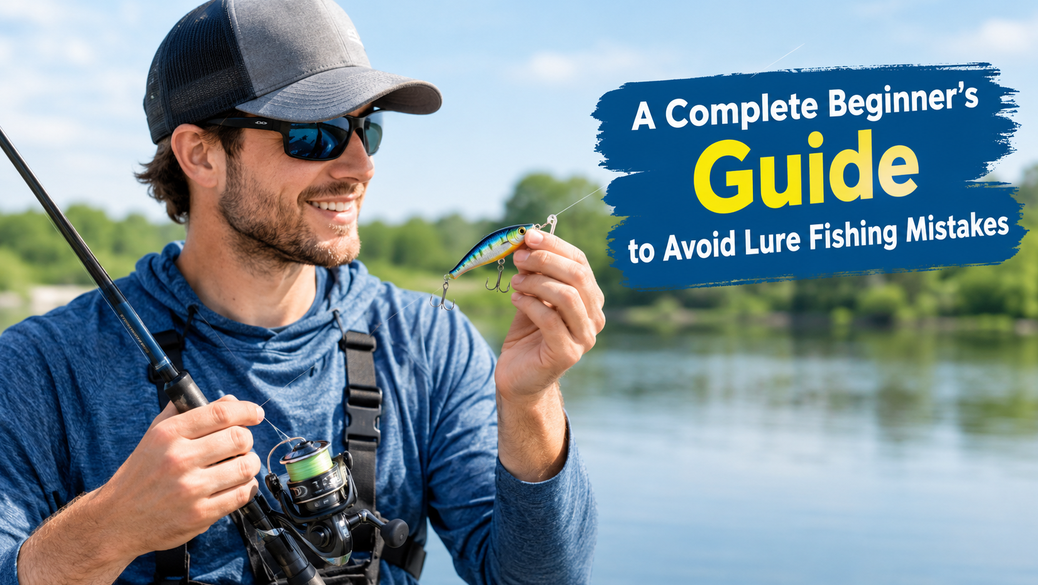
Lure or Bait Fishing Errors: How to Fix Them to Catch More Fish
When being in the same spot, you can cast the same lure as the angler next to you, but you still go home with empty-handed.
This guide combines lessons from some experienced anglers covering topwater, live bait, artificial lures and bass fishing.
It covers the common lure fishing mistakes beginners make and shows you how to fix each one.
Also, you will Learn how to choose the right lure, improve retrieval speed, and present artificial baits naturally.
Introduction: Why Your Lures Aren’t Catching Fish
Have you ever spent hours casting artificial lures without getting a single strike, only to watch another angler catch fish using a similar setup? You’re not alone. Many anglers struggle because of a few simple mistakes that affect how their lures move, where they fish them, and whether predators have enough time to strike.
Understanding lure fishing mistakes can help you become more consistent without buying an entirely new tackle collection. Three major problems stand out: using the wrong lure for the location, retrieving it at the wrong speed, and failing to give the fish enough opportunities to encounter it.
Whether you’re targeting striped bass, largemouth bass, walleye, pike, or inshore saltwater species, these principles can improve your presentation. Let’s examine the most common problems and how to correct them.
1. Using the Wrong Lure in the Wrong Location
One of the most common lure fishing mistakes beginners make is choosing a lure without considering the underwater environment. A lure that works perfectly in a deep lake might constantly snag when used around a rocky riverbed with strong current.
Every fishing location presents different challenges. Rocks, vegetation, current, depth, and the presence of baitfish all influence which lure is most effective.
Heavy lures that sink to the bottom get pushed by the current into the rocks and hang up. The solution is to stay high in the water column, or to be very experienced at jigging before you try it in that current. If the current is too fast, he suggests not bothering at all.
Match Your Lure to the Water Conditions
If you are fishing around the Potomac River, where rocky structure and moving water make lure selection particularly important.
A heavy lure that sinks quickly can become trapped between rocks as the current pushes it downstream. Instead of spending time fishing, you’ll spend time freeing snags or replacing lost tackle.
Consider these practical adjustments:
- Rocky bottoms: Try a floating lure, shallow-running crankbait, or another presentation that reduces contact with snags.
- Strong current: Choose a lure with an appropriate weight and action that you can control without constantly dragging it into rocks.
- Surface-feeding fish: Use topwater lures when conditions and fish behavior make a surface presentation effective.
- Vegetation: Consider weedless soft plastics or other snag-resistant presentations around heavy cover.
- Deeper water: Select a lure that reaches the intended depth while remaining manageable around underwater structure.
How to Choose the Right Lure for Fishing
Learning how to choose the right lure for fishing starts with observing what fish are eating. If predators are actively attacking small baitfish, a baitfish-shaped lure is a logical choice. If they’re feeding on shrimp or crabs, a crustacean-style soft plastic may be more appropriate.
You have to match lure size to the available prey. Smaller baitfish profiles can be effective when young baitfish are abundant, while larger profiles may be more suitable when predators target bigger forage.
Color matters, too. In clear water, natural and subtle colors often provide a convincing appearance. Presentation is the third major error, and it takes two forms: fishing outside the strike zone, or retrieving in a way fish don’t see as natural
In murky water, white, chartreuse, reflective finishes, or darker silhouettes can help a lure remain visible.
These adjustments address bass lure fishing mistakes and can also help anglers avoid walleye lure mistakes, pike lure fishing mistakes, and trout lure fishing mistakes.
How to Avoid Snagging Lures
When fishing around rocks, submerged timber, or aquatic vegetation, learn to control the depth and path of your lure. Avoid allowing a sinking lure to drift uncontrolled into obstacles.
For anglers wondering how to stop lure snagging in lily pads, a weedless rigged soft plastic or a frog designed for surface vegetation can be a useful option. Retrieve the lure across openings and edges instead of forcing it through dense cover with an unsuitable treble-hook bait.
A lure retrieval tool for heavy cover can also help recover some snagged lures, although it won’t free every hook. Carrying an appropriate retrieval tool can reduce tackle losses and save fishing time.
If you want to know how to avoid snagging lures, match weight and lure type to the structure and flow:
- Choose suspending, floating or topwater lures over rocky, current-swept bottoms.
- Use a lighter jig head over grass so you aren’t dragging weeds.
- Choose weedless hooks in shallow cover.
And, to stop lure snagging in lily pads, you can use a weedless, surface-running lure and keep it moving across the top.
A lure retrieval tool for heavy cover is also worth carrying, because it saves lures and keeps you from spooking the area while you free a stuck one.
2. Retrieving Your Lure at the Wrong Speed
Some lure retrieve speed mistakes are very common, and a slower retrieve often gets you more fish. If fish are chasing or busting your lure, slow down or stop it completely, because they often hit right after the pause.
This is also the answer to why fish follow lure but don’t bite: they chase but aren’t given a full chance to strike.
The second major mistake is retrieving too quickly or too slowly for the conditions. Even an excellent lure can fail when its presentation doesn’t match the feeding behavior of nearby fish.
This is the principle through topwater fishing for striped bass. By slowing the retrieve and allowing the lure to move naturally across the surface, the anglers created opportunities for fish to strike.
Correct Your Lure Retrieval Speed
Lure retrieve speed mistakes often happen when anglers assume that moving a lure faster will attract more attention. A fast retrieve can trigger aggressive predators in some situations, but it can also prevent fish from catching up or committing to an attack.
A slower presentation may give fish more time to inspect and strike the lure. However, slow is not always best. Experiment with several speeds until the fish respond.
Try this simple approach:
- Begin with a steady retrieve that allows the lure to work as designed.
- Slow down if fish follow the lure without striking.
- Introduce pauses, twitches, or changes in direction when appropriate for the lure type.
- Increase speed if fish respond better to a fleeing or rapidly moving presentation.
- Repeat productive retrieves and adjust when conditions change.
Master the Topwater Walking-the-Dog Technique
Topwater fishing is exciting because you can often see a fish explode on the lure. However, topwater lure mistakes can prevent you from getting the strikes you want.
Many topwater lure mistakes come down to working the lure too fast. A walking-the-dog action technique, with a slow twitch of the rod tip and slack taken in at the same time, sends the head left and right
This technique makes a suitable surface lure move from side to side rather than traveling straight toward the angler.
To perform the technique:
- Cast toward visible surface activity or promising structure.
- Keep the rod tip relatively low and use short, controlled twitches.
- Reel in slack line gradually while maintaining contact with the lure.
- Allow the lure to zigzag from side to side.
- Pause briefly when appropriate, particularly when a fish follows the lure.
This method can help you cover water while producing an appealing surface presentation. If a fish misses the lure or follows without striking, experiment with a pause or a change in cadence rather than immediately abandoning the location.
If you wonder why fish miss my lure, check hook quality and size. The guide noted that thin-gauge freshwater hooks bent on a good striper, so he swaps in bigger saltwater hooks. Among saltwater lure fishing mistakes, using light freshwater hardware on larger fish is a frequent one
Correct Lure Action Mistakes When Twitching a Jerkbait
Lure action mistakes twitching jerkbait presentations often begin before the first cast. An incorrectly rigged soft plastic can spin or helicopter through the water instead of darting naturally.
The knot also matters. Some twitching presentations benefit from a suitable loop knot that allows more freedom of movement, while other lure designs call for different connections. Use the knot recommended for your lure and fishing line.
Check that the hook is aligned properly, the lure body is straight, and the connection does not restrict the intended action.
3. Not Casting Enough or Covering Water Effectively
The third mistake is failing to give a productive lure enough opportunities to find fish. Sometimes your equipment and technique are correct, but fish are not present in the immediate area or aren’t actively feeding.
Here, striped bass and other mobile predators may move through an area rather than remain in one precise location.
Search for Active Fish
Instead of repeatedly casting into one unproductive spot, work methodically across different areas.
Look for:
- Baitfish scattering near the surface.
- Predators chasing or striking small fish.
- Current seams, rocky points, and deeper pockets.
- Edges of weed beds and other structure that attracts baitfish.
- Changes in light, weather, and water movement that may influence feeding activity.
Cast toward visible activity when possible. If nothing is happening on the surface, cover promising water with a systematic pattern of casts.
Fishing at a productive time can also improve your chances. The original video describes checking a fishing app for reported catches and predicted bite times before fishing the Potomac River. These tools can guide your planning, but treat predictions as useful clues rather than guarantees.
Know When to Change Your Approach
Confidence is important, but persistence should not mean ignoring evidence. If a lure produces no response after you’ve covered likely holding areas, adjust the presentation.
Change one variable at a time, such as depth, retrieve speed, lure size, or color. This makes it easier to identify which adjustment improves the results.
When asking why fish follow lure but don’t bite, consider whether the lure is moving too quickly, looks unnatural, or doesn’t resemble the prey the fish are targeting. If you’re wondering why fish miss my lure, inspect the hooks, consider whether the fish are striking the tail, and experiment with pauses or a different retrieve.
4. Avoid Common Rigging and Presentation Problems
Although the three primary mistakes involve lure choice, retrieval, and fishing effort, you must also learn how rigging affects natural movement.
The most damaging live bait rigging mistakes are:
- Hooking shrimp in the back: it spins and sits upside down in current. Hook through the head or tail instead.
- Hooking baitfish toward the tail in current: the bait twirls and looks unnatural. Hook forward and keep it centered and streamlined.
- Over-rigging: metal leaders, beads and big hooks announce that the bait isn’t natural. Go as light as possible, for example a 30-pound fluorocarbon leader, a small split shot and a small hook.
Prevent Soft Plastic Lure Rigging Errors
Some of the most frequent mistakes when using soft plastic lures involve incorrect hook placement, unsuitable jig-head length, and poor alignment.
If a soft plastic jerkbait is crooked on the hook, it may spin rather than move naturally. A paddle-tail lure can also lose its intended action when the hook shank is too long or the body is improperly positioned.
To understand how to prevent soft plastic lures tearing, rig the bait carefully, use a hook suited to its size, and avoid repeatedly pulling it off the hook during adjustments. A suitable keeper or rigging method may help extend its usable life.
These soft plastic lure mistakes bass anglers encounter can reduce both lure action and hook-up opportunities.
Understand Crankbait and Spinnerbait Mistakes
Crankbait fishing mistakes often include using a lure that dives too deeply, choosing an unsuitable profile, or failing to check its swimming action.
If you’re asking why does my crankbait run sideways fix, inspect the lure for damage, examine the line connection, and check whether the line tie or bill is bent. Make small adjustments only when appropriate for that lure’s design.
Spinnerbait fishing mistakes include retrieving at an unsuitable speed or choosing a model that doesn’t match the water depth and cover. Confirm that the blades rotate freely and experiment with a retrieve that keeps the lure in the intended strike zone.
Depth control is a key part of jig fishing mistakes to avoid. A heavy jig head dragging over grass pulls up weeds, while a lighter one stays natural. Under a bridge, use a heavier head so you can reach the bottom
In this situation, you must pay attention to weight, bottom contact, hook alignment, and the type of structure you’re fishing. Excessively heavy jigs can become snagged, while overly light jigs may be difficult to control in strong current.
Use Appropriate Tackle for the Target Species
At this point, the tackle strength also matters here. A freshwater topwater lure caught a striped bass, but its relatively light hooks bent under pressure. The angler subsequently used a similar lure fitted with stronger saltwater hooks.
The lesson is to match hooks, line, leader, and rod to the expected fish. This is especially relevant when avoiding saltwater lure fishing mistakes, where powerful fish and demanding conditions can expose weaknesses in unsuitable tackle.
5. Don’t Confuse Artificial Lure Problems With Live-Bait Problems
Artificial lure mistakes and live bait rigging mistakes share a common principle: presentation matters. However, the two techniques are not interchangeable.
In live-bait section, that improperly hooked shrimp can spin in current. Hooking shrimp through the head or tail, depending on the presentation, can help maintain a more streamlined profile.
For pinfish in current, the presenter recommends centered, forward-oriented rigging to reduce unnatural spinning. The discussion also highlights using tackle that is as light and unobtrusive as practical while remaining strong enough for the target species.
These lessons reinforce the importance of observing how a bait behaves underwater rather than assuming that a natural bait or expensive artificial lure will automatically produce strikes.
A lure scent spray to fix non biting fish may occasionally provide an additional attractant for suitable scented or compatible lures, but it cannot reliably solve problems caused by incorrect depth, poor rigging, unsuitable lure selection, or an unproductive location.
Species and Seasonal Notes
These general notes apply across species and seasons:
- Crankbait fishing mistakes: wrong depth for the water temperature, and poor tuning.
- Spinnerbait fishing mistakes: retrieving too fast, so the blades never get a natural vibration.
- Spinning lure fishing mistakes: line twist and incorrect drag or lure weight for the rod.
- Pike lure fishing mistakes: light leaders that bite-offs cut through.
- Walleye lure mistakes: fishing too fast over structure.
- Trout lure fishing mistakes: heavy lures and visible line in clear water.
- Cold water lure fishing mistakes: retrieving at summer speed when fish are sluggish.
If fish follow but won’t commit, a lure scent spray to fix non biting fish can help on soft plastics, but fix your rigging, color and speed first
Frequently Asked Questions About Lure Fishing Mistakes
What are the three biggest lure fishing mistakes?
The three main mistakes discussed here are using the wrong lure for the location, retrieving at the wrong speed, and failing to cast enough or cover water effectively. Correcting these problems can improve your chances of finding active fish.
Why do fish follow my lure but never bite?
Fish may follow without striking because the retrieve is too fast, the lure’s action looks unnatural, or its size and profile don’t match the prey. Try slowing down, adding a pause, or changing the presentation.
What is the best retrieve speed for bass fishing?
There is no universal best speed. Start with a controlled retrieve suited to the lure, then experiment with faster movements, slower retrieves, pauses, or twitches until fish respond.
How can I avoid losing lures around rocks and weeds?
Choose a lure designed for the cover, control its depth, and avoid dragging it blindly through obstacles. Weedless soft plastics are useful around vegetation, while floating or shallow-running lures may reduce some rocky-bottom snags.
Are lure fishing mistakes different in cold water?
Cold water can change fish activity and feeding behavior, so cold water lure fishing mistakes often involve retrieving too quickly or selecting an unsuitable profile. Experiment with slower presentations and smaller or more natural-looking lures when conditions suggest fish are less active.
Do different species require different lure presentations?
Yes. Bass, walleye, pike, trout, and saltwater predators can respond differently to lure size, action, depth, and speed. Species-specific techniques are useful, but the core principles of natural presentation and appropriate tackle apply broadly.
Why does my crankbait run sideways fix?
If you ask why does my crankbait run sideways fix, the usual cause is a tuning problem. Check that the line tie is centered and not bent. Adjust it gently toward the side the lure pulls to, and test it beside the boat.
What are the most common lure fishing mistakes?
The most common are the wrong lure for the location, poor rigging and knots, wrong profile or color, fishing at the wrong speed or depth, and ignoring tide and conditions.
Why do fish follow my lure but not bite?
Usually the retrieve is too fast or unnatural. Slow down, pause, or stop the lure so they can strike.
How do I choose the right lure color?
Use natural or light colors in clear water. In dirty water use white or chartreuse, or a dark silhouette.
Does the knot really affect lure action?
Yes. A snug knot can stop a twitch bait from darting, while a loop knot gives freer movement.
Should I move spots if I’m not catching fish?
Yes. Give a spot 20 to 30 minutes, then move. If you find fish, stay.
Conclusion: Fish Smarter by Correcting the Basics Lures Mistakes
Most lure fishing mistakes are simple to fix once you know what to look for. Rig lures correctly, choose the right profile, size and color, control speed and depth, and read the water and tide
Avoiding lure fishing mistakes doesn’t require an expensive tackle collection or a complicated fishing system. Start by selecting a lure suited to your location, controlling its retrieve speed, and covering enough productive water to locate active fish.
Next, inspect your rigging, check the lure’s action, and make sure your hooks and line can handle the fish you’re targeting.
Pay attention to baitfish activity and change your presentation when the evidence suggests your current approach isn’t working.
Key takeaways:
-
- Match lure to the structure and based on currenttype, size, color, and depth to the environment and available prey.
- Experiment with retrieve speed, pauses, and twitches rather than retrieving automatically.
- Cover water systematically and look for signs of active fish.
- Rig lures correctly so they move as intended.
- Use tackle strong enough for your target species and conditions.
- Stay confident, observe what happens, and adjust your approach when necessary.
- Check rigging and use free-moving knots.
- Slow down your retrieve and pause.
- Choose color by water clarity.
- Keep live bait natural and tackle light.
- Read the tide, move when needed, and learn from blanks.
The next time fish refuse to bite, don’t immediately blame your lure.
Review your location, presentation, and rigging first. Small corrections can make your fishing more productive and help you turn missed opportunities into successful catches.
