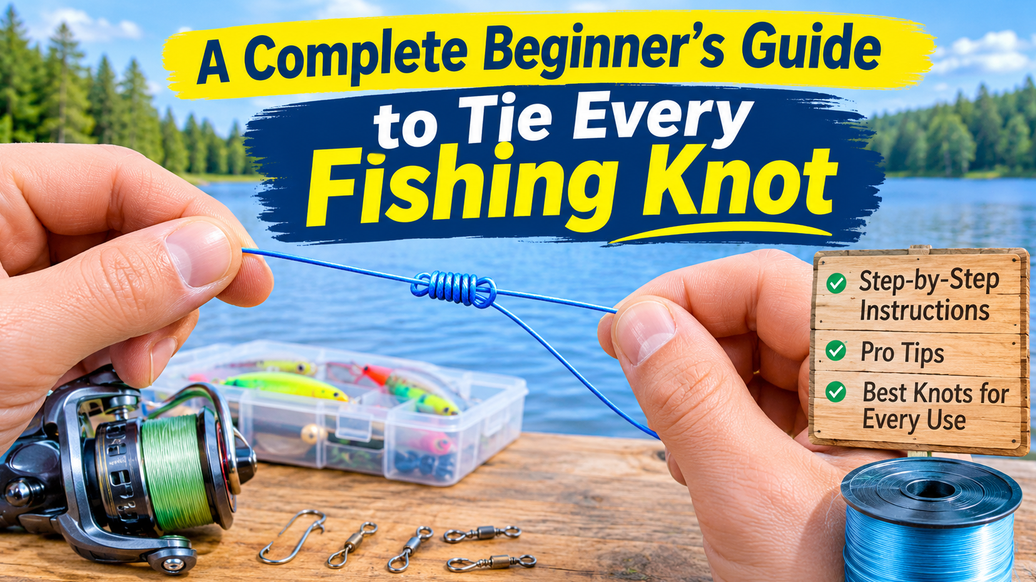
A Complete Explanation of 15 Types of Fishing Knots: How to Tie & Use Them
Even the most expensive fishing rod, reel, and fishing line cannot guarantee a successful catch if your fishing knot fails. A poorly tied knot is one of the weakest points in your fishing setup, and it can mean losing a valuable lure or the biggest fish of your day.
Understanding the different types of fishing knots explained in this guide will help you build stronger connections between your fishing line, leader, hook, swivel, and reel. Each knot serves a different purpose. Some are designed for connecting two fishing lines, while others provide reliable hook connections or allow lures to move more naturally.
Whether you are a beginner learning fishing knots step by step or an experienced angler looking to improve your connections, learning these 15 essential knots will make your fishing setup more reliable.
This guide discusses type of fishing knot, where you can learn what each knot does, how it is tied, and where it falls short.
Why Choosing the Right Fishing Knot Matters
Fishing line is slippery, particularly braided line, and ordinary household knots are not designed to hold under fishing pressure. A properly selected fishing knot distributes tension, grips the line securely, and minimizes unnecessary strength loss.
The best knot depends on several factors:
- Line material: Monofilament, fluorocarbon, and braided line have different characteristics.
- Line diameter: Some knots perform better when joining lines of similar thickness.
- Fishing application: Connecting a leader requires a different knot from attaching a hook.
- Knot size: Compact knots pass through rod guides more smoothly.
- Ease of tying: Beginners benefit from simple knots that can be repeated consistently.
15 Essential Types of Fishing Knots Explained
1. Arbor Knot
The Arbor Knot connects fishing line to the spool of your reel. It is used when initially loading a spinning reel, baitcaster, or conventional reel. Unlike other fishing knots, it is not intended to fight a fish. Its purpose is simply to secure the line to the spool.
How to Tie an Arbor Knot
- Wrap your fishing line around the empty reel spool.
- Tie an overhand knot around the main line.
- Tie another overhand knot in the tag end.
- Pull the main line until both knots slide together and tighten against the spool.
Best for: Attaching fishing line to a reel before spooling.
Important tip: Braided line can slip around a bare metal spool. Use monofilament backing or an appropriate spool tape to prevent the entire line from rotating under pressure.
2. Double Uni Knot
The Double Uni Knot is one of the most versatile connections for joining two fishing lines. It is particularly useful for connecting braided main line to a fluorocarbon or monofilament leader.
How to Tie a Double Uni Knot
- Overlap the two lines by several inches.
- Make a loop with the first tag end.
- Wrap the tag end through the loop around the opposite line four to six times, depending on the material.
- Repeat the process with the other tag end.
- Wet both knots and pull the main lines in opposite directions until they slide together.
- Trim the excess tag ends.
Best for: Braid-to-leader connections and joining different line materials.
Limitation: It creates a relatively bulky connection that may click against rod guides during long casts. Braided line generally benefits from additional wraps because of its slippery surface.
3. Blood Knot
Also called the Barrel Knot, the Blood Knot is commonly used in fly fishing to connect two pieces of monofilament or nylon line with similar diameters. Its slim profile allows it to travel through rod guides smoothly.
How to Tie a Blood Knot
- Overlap the two line ends.
- Wrap one tag end around the opposite line approximately three to five times.
- Repeat with the other tag end in the opposite direction.
- Pass both tag ends back through the center opening in opposite directions.
- Moisten the knot and pull both main lines slowly.
- Trim the excess line.
Best for: Joining similar-diameter monofilament lines and constructing fly-fishing leaders.
Limitation: It is difficult to tie when the line diameters are significantly different or when your fingers are cold.
4. Double Surgeon’s Knot
The Double Surgeon’s Knot is a quick and practical connection for joining two lines, particularly when their diameters differ slightly. It is popular among anglers who need to replace leaders or tippets quickly.
How to Tie a Double Surgeon’s Knot
- Place the two lines alongside each other.
- Form an overhand loop using both lines.
- Pass both tag ends through the loop twice.
- Moisten the knot.
- Pull all four strands evenly until the knot tightens.
- Trim the tag ends.
Best for: Quickly connecting fly-fishing tippets to heavier leaders.
Limitation: The connection is bulkier than a well-tied Blood Knot and requires enough free line to pass through the loop.
5. Albright Knot
The Albright Knot is designed to connect lines with significantly different diameters. It is particularly useful when connecting thin braided line to a heavier monofilament leader or wire.
How to Tie an Albright Knot
- Bend the heavier leader into a U-shaped loop.
- Pass the thinner line through the loop.
- Wrap the thin line around both sides of the leader approximately ten times.
- Pass the tag end back through the loop in the same direction it entered.
- Moisten and tighten the knot carefully.
- Finish with additional half hitches when appropriate, particularly with braid.
Best for: Heavy shock leaders, wire connections, and lines with different diameters.
Limitation: Braided line can gradually slip if the wraps are not secured properly.
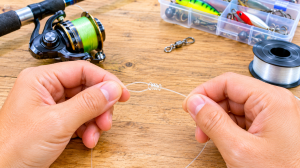
6. FG Knot
The FG Knot is a popular connection for joining braided main line to a fluorocarbon or monofilament leader. Instead of creating two conventional knots, the braid weaves around the leader and grips it through friction.
How to Tie an FG Knot
- Keep the braided line under consistent tension.
- Position the leader across the braid.
- Alternate the braid over and under the leader approximately 20 times.
- Maintain tension throughout the weaving process.
- Secure the connection with several half hitches.
- Pull the connection firmly and trim the tag ends.
Best for: Braid-to-fluorocarbon connections, spinning reels, and long casting applications.
Limitation: The FG Knot requires practice. If the braid becomes slack during tying, the connection may not grip correctly.
For anglers seeking the best fishing knot for braided line to leader, the FG Knot is an excellent option when a slim, properly constructed connection is important.
7. Bimini Twist
The Bimini Twist creates a strong doubled section of fishing line with a loop at the end. It is commonly used in offshore fishing and big-game applications where maintaining line strength is important.
How to Tie a Bimini Twist
- Create a large loop in the fishing line.
- Twist the doubled section approximately 20 times.
- Spread the twists apart while maintaining tension.
- Allow the tag end to wrap back over the twisted section.
- Finish with several half hitches.
Best for: Offshore trolling, heavy-duty fishing, and creating doubled-line connections.
Limitation: It takes time, practice, and both hands to tie correctly.
8. Dropper Loop Knot
The Dropper Loop creates a fixed loop that extends sideways from the main fishing line. It allows anglers to attach additional hooks above a sinker without cutting the main line.
How to Tie a Dropper Loop
- Form a loop in the fishing line.
- Twist one side around the other approximately seven times.
- Push the center of the loop through the middle opening.
- Pull both ends evenly to tighten.
- Attach a hook to the finished loop.
Best for: Bottom fishing, multi-hook rigs, pier fishing, and boat fishing.
Limitation: Multiple loops can increase tangles and create additional weak points in the main line.
9. Improved Clinch Knot
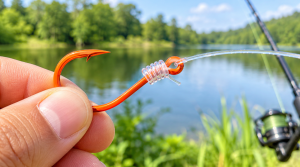
The Improved Clinch Knot is one of the most recognizable beginner fishing knots. It provides a straightforward way to attach fishing line to hooks, lures, and swivels, especially when using monofilament or fluorocarbon.
Improved Clinch Knot: How to Tie It
- Pass the line through the hook eye.
- Wrap the tag end around the main line five to seven times.
- Pass the tag end through the small loop near the hook eye.
- Pass it back through the larger loop created by the previous step.
- Moisten the line.
- Pull the main line slowly until the wraps tighten against the hook eye.
- Trim the excess tag end.
Best for: Attaching hooks, lures, and swivels using monofilament or fluorocarbon.
Limitation: It can slip with braided line and may weaken if tightened without lubrication.
10. Palomar Knot
The Palomar Knot is widely recognized as one of the strongest and easiest fishing knots for everyday applications. Its doubled-line construction makes it particularly effective with braided fishing line.
How to Tie a Palomar Knot
- Double approximately six inches of fishing line.
- Pass the doubled loop through the hook eye.
- Tie a loose overhand knot with the doubled line.
- Pass the entire hook or lure through the loop.
- Moisten the knot and pull both ends evenly.
- Trim the excess tag end.
Best for: Braided line, drop-shot rigs, hooks, and everyday lure fishing.
Limitation: Passing the entire lure through the loop can be inconvenient when using large crankbaits or lures with multiple treble hooks.
11. San Diego Jam Knot
The San Diego Jam Knot is designed for strong hook and lure connections, particularly when using heavy fluorocarbon. It is popular among saltwater anglers targeting large fish.
How to Tie a San Diego Jam Knot
- Pass the line through the hook or lure eye.
- Double the tag end back alongside the main line.
- Wrap the tag around both strands approximately seven times.
- Pass the tag through the loop near the hook eye.
- Bring it back through the upper loop.
- Moisten and tighten carefully.
- Trim the tag end.
Best for: Heavy fluorocarbon leaders, large lures, and saltwater fishing.
Limitation: Crossed or poorly seated wraps can weaken the connection.
12. Uni Knot
The Uni Knot, also known as the Grinner Knot, is a versatile fishing knot that can attach line to hooks, swivels, and lures. It can also be adapted for joining two fishing lines.
How to Tie a Uni Knot
- Pass the line through the hook eye.
- Bring the tag end alongside the main line.
- Form a loop with the tag end.
- Wrap the tag through the loop approximately four to six times for suitable line materials.
- Moisten the knot and pull the tag end to tighten.
- Slide the finished knot toward the hook eye.
- Trim the excess line.
Best for: General-purpose fishing, hooks, swivels, and connecting lines.
Limitation: Specialized knots may perform better for certain applications, particularly slim braid-to-leader connections.
13. Snell Knot
The Snell Knot is different from conventional hook knots because it secures the fishing line around the hook shank rather than relying only on the hook eye. This creates a direct line of pull along the hook.
How to Tie a Snell Knot
- Pass the leader through the hook eye.
- Lay the line alongside the hook shank.
- Form a loop and wrap the tag end around the shank and line approximately seven times.
- Keep the wraps neat and close together.
- Pull the main line to tighten the wraps.
- Trim the tag end.
Best for: Circle hooks, bait fishing, and pre-tied hook rigs.
Limitation: Traditional Snell configurations are intended for hooks with suitable turned-up or turned-down eyes, not ordinary lure connections.
14. Non-Slip Loop Knot
The Non-Slip Loop Knot, also called the Kreh Loop, creates a fixed loop between the fishing line and lure. Unlike knots that tighten directly against the lure eye, this connection allows the lure to move more freely.
How to Tie a Non-Slip Loop Knot
- Tie a loose overhand knot in the line.
- Pass the tag end through the lure eye.
- Bring the tag end back through the overhand knot.
- Wrap the tag around the main line several times.
- Pass the tag end back through the original overhand knot.
- Moisten and tighten the connection while maintaining the desired loop size.
Best for: Jerkbaits, streamers, bucktails, and lures that benefit from additional movement.
Limitation: An oversized loop can tangle with hooks or collect weeds.
15. Wind Knot
Unlike the other knots in this guide, a Wind Knot is accidental rather than intentional. It commonly develops on spinning reels when loose coils of fishing line overlap during casting.
Wind knots are especially common when using soft braided line, lightweight lures, and casting into the wind. The resulting overhand knot can significantly weaken the fishing line.
How to Prevent Wind Knots
- Maintain appropriate tension when spooling your reel.
- Avoid overfilling the spool.
- Close the bail manually after casting.
- Remove loose line before beginning the next cast.
- Use suitable lure weights for your line and rod.
- Inspect rough or tangled sections and replace damaged line.
Best approach: Prevention. If a wind knot cannot be removed cleanly, cut the damaged section and retie your line.
How to Choose the Right Fishing Knot
Anyway, choosing the right fishing knot is more important than memorizing every knot. Start by identifying what you need to connect and which line material you are using.
And, knowing how to choose the right fishing knot comes down to three questions:
- What line are you using? Mono suits the improved clinch; braid suits the Palomar or uni.
- What are you tying to? Small hooks suit the Palomar; large lures suit the San Diego jam or non-slip loop.
- What do you need the lure to do? Add a loop knot for action, or a snell for a hidden low profile.
Best Knots for Different Fishing Applications
- Braid to fluorocarbon leader: FG Knot or Double Uni Knot.
- Similar-diameter monofilament: Blood Knot.
- Different line diameters: Albright Knot or Double Surgeon’s Knot.
- Hook to monofilament: Improved Clinch Knot or Uni Knot.
- Hook to braided line: Palomar Knot.
- Heavy fluorocarbon to a hook or swivel: San Diego Jam Knot or a suitable Uni Knot.
- Circle hooks: Snell Knot.
- Free-moving lures: Non-Slip Loop Knot.
- Creating a doubled line: Bimini Twist.
Palomar Knot vs Uni Knot for Braid Line Strength
The Palomar Knot is an excellent choice for anglers who want a simple, reliable braid-to-hook connection. The Uni Knot offers greater versatility and can be used for different terminal connections and line-joining applications. Actual knot strength depends on line construction, diameter, tying technique, and how consistently the knot is seated.
Palomar Knot vs Improved Clinch Knot
The Palomar Knot is generally the better choice for braided line because its doubled construction provides a secure connection. The Improved Clinch Knot is a practical option for monofilament and fluorocarbon. For beginners, both are worth learning because they cover different fishing situations.
What Is the Strongest Fishing Knot for Beginners?
There is no single strongest knot for every fishing situation. However, the Palomar Knot is an excellent starting point for beginners because it is relatively easy to tie and performs well with many common fishing lines. The Double Uni Knot is another essential beginner skill for connecting a leader to a main line.
Essential Fishing Knot Tying Tips
- Lubricate before tightening: Wet the knot to reduce friction and heat damage.
- Use the correct number of wraps: Slippery braid often requires additional turns compared with monofilament.
- Pull steadily: Tighten the knot smoothly instead of jerking the line.
- Inspect every connection: Look for crossed wraps, loose coils, and damaged line.
- Trim tag ends carefully: Leave enough material to reduce the risk of slipping.
- Practice before fishing: Learn important knots at home rather than under pressure on the water.
A fishing knot tying tool for beginners can make handling thin braided line and small hooks easier. A quick tie fishing knot tool stainless steel design can also help anglers work with slippery braid, although correct knot construction remains essential.
When shopping for the best knot tying tool for braid to fluorocarbon, prioritize secure gripping surfaces and a design that suits the FG or other leader knots you intend to tie.
For heavier applications, a braid to mono knot tool for heavy leader can make handling thick leader material more convenient. However, no tool can compensate for incorrect wraps or insufficient tightening.
What Are the Different Types of Fishing Knots?
If you are asking what are the different types of fishing knots, the answer is that they fall into five jobs. Each one solves a different problem on the water.
- Reel knots: tie line to the spool like arbor knot.
- Line-to-line knots: join two lines such as in double uni, blood knot, double surgeon’s, Albright, FG knot.
- Loop and doubling knots: create strong loops or doubled line such as in Bimini twist, dropper loop.
- Terminal knots: tie line to a hook, lure or swivel such as in improved clinch, Palomar, San Diego jam, uni, snell, non-slip loop.
- Accidental knots: the wind knot, which nobody ties on purpose.
Common fishing knots include the Arbor, Double Uni, Blood, Double Surgeon’s, Albright, FG, Bimini Twist, Dropper Loop, Improved Clinch, Palomar, San Diego Jam, Uni, Snell, and Non-Slip Loop knots. Wind knots are accidental tangles that anglers should prevent.
Why Slippery Line Needs the Right Knot
Fishing line is slippery, so ordinary knots fail. One demonstration showed a reef knot, great for rope, pulling apart on nylon. Braid needs even more turns for grip, and braid scissors help because tough braid ruins normal scissors. Always wet the knot with water or saliva before cinching.
Step by Step to Choose Fishing Knots for Beginners
For choosing fishing knots for beginners, follow this order:
- Spool the reel with an arbor knot.
- Learn the improved clinch for mono.
- Learn the Palomar for braid and small hooks.
- Learn the double uni to attach a leader.
- Add specialist knots such as snell, San Diego jam, FG as you advance.
Frequently Asked Questions
What is the best knot for connecting two fishing lines?
The Double Uni Knot is a versatile option for connecting two lines, including braided main line to a fluorocarbon leader. The FG Knot is another excellent choice when a slimmer braid-to-leader connection is needed.
What is the strongest fishing knot for monofilament?
Several knots can provide strong monofilament connections, including the Palomar, Uni, and Improved Clinch. The best option depends on whether you are attaching a hook, swivel, or another fishing line.
What is the best knot for tying a hook to fishing line?
The Palomar, Uni, and Improved Clinch knots are reliable options. Choose the Palomar for a simple braid connection and the Improved Clinch for many monofilament and fluorocarbon applications.
What is the easiest FG knot alternative for fluorocarbon?
The Double Uni Knot is a practical alternative for joining braid to fluorocarbon. It is easier to learn than the FG Knot, although its finished connection is generally bulkier.
What is the easiest fishing knot for small hooks with thin line?
The Improved Clinch Knot and Uni Knot are useful choices for small hooks. The best option depends on the hook-eye size and fishing line material.
How do I tie the Improved Clinch Knot correctly?
Pass the line through the hook eye, wrap the tag end around the main line five to seven times, pass it through the small loop and then the larger loop, lubricate, and tighten slowly.
Which knot is best for heavy fluorocarbon to a swivel?
The San Diego Jam Knot is a useful option for heavy fluorocarbon connections. A properly tied Uni Knot can also be suitable, depending on the line diameter and swivel eye.
What is the strongest fishing knot for beginners?
The Palomar is the usual answer is with the Palomar for braid and the improved clinch for mono. Both are easy and reliable.
What is the best fishing knot for braided line to leader?
The double uni is the practical choice for most anglers. The FG knot is slimmer but much harder to learn.
Why do fishing knots slip?
Braid is slippery and needs more wraps. Knots also weaken if they are not wetted before tightening.
Which knot is best for heavy fluorocarbon?
The San Diego jam bed down cleanly in stiff, thick line.
Should I learn many knots or just a few?
Start with the Palomar and double uni. You can fish almost anywhere with those two.
Conclusion: Master These Essential Fishing Knots
Learning different fishing knots is one of the most valuable skills an angler can develop. Even expensive fishing equipment cannot compensate for a weak or incorrectly tied connection. The right knot helps preserve line strength, improve casting performance, and reduce the chance of losing fish.
Beginners should start with the Palomar Knot, Improved Clinch Knot, Uni Knot, and Double Uni Knot. These cover many everyday fishing situations, from attaching hooks to connecting braided main line with a leader. As your experience grows, practice the FG Knot, Blood Knot, Snell Knot, and other specialized connections.
Key Takeaways
-
- Choose fishing knots according to line material and fishing application.
- Learn the Palomar Knot for reliable hook connections.
- Use the Double Uni Knot for versatile leader connections.
- Practice the FG Knot when you need a slim braid-to-leader connection.
- Always lubricate knots before tightening.
- Inspect and retie damaged or questionable connections before fishing.
- Every knot weakens line; the right one minimizes the loss.
- Palomar and double uni cover most situations.
- Use the improved clinch for mono and fluorocarbon.
- Give braid extra wraps and lock it well.
- Use the San Diego jam for heavy fluorocarbon and big lures.
- Check for wind knots whenever a cast stops short.
The right knot protects your line, your lure and your catch. Learn a few well, practice at home, and match each knot to your line and lure. That small effort often makes the difference between landing a fish and losing it.
Ultimately, the strongest fishing setup is not necessarily the most expensive one. It is the setup built with the right equipment, properly maintained line, and fishing knots tied correctly every time.
