Complete Beginner Guide to Locate Fish Spot in Saltwater Fishing
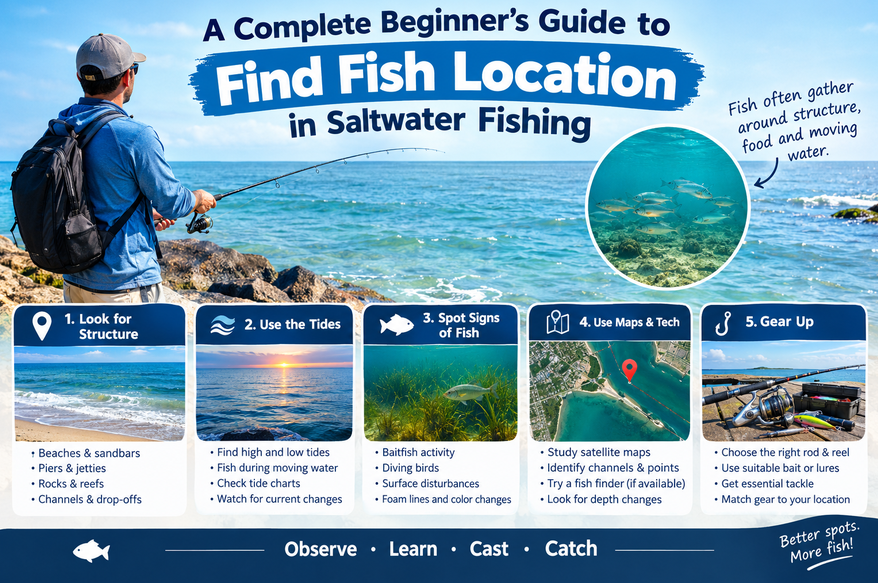
Finding fish in saltwater isn’t about casting as far as possible or spending thousands of dollars on expensive fishing gear. It’s all about understanding where fish feed, where they hide, and how tides and currents influence their movements. Once you learn to recognize these patterns, you can spend less time searching and more time catching fish in saltwater.
Whether you’re fishing from a beach, pier, jetty, rocky shoreline, or coastal bay, the same fundamental principles apply. Fish look for three things: safety, food, and favorable water conditions. The most productive fishing spots often provide all three in one location.
Usually, fish crowd into a few places, and many of those are close to land. So, you must learn step by step saltwater fishing techniques to find fish location on every kind of shore spot.
In this guide, we’ll explore practical saltwater fishing techniques to find fish location, including how to read underwater structure, use tide charts, identify productive shore-fishing spots, and recognize signs of feeding fish. These techniques can help beginners and experienced anglers make better decisions on their next saltwater fishing trip.
1. Understand What Makes a Productive Fishing Spot
Before choosing a fishing location, learn to think like a predator. Fish don’t distribute themselves evenly throughout the ocean. They gather around areas that provide food, shelter, and access to favorable currents.
Look for Three Essential Elements
- Shelter: Rocks, bridge pilings, docks, submerged structures, and deep-water edges give fish places to hide from predators and ambush prey.
- Food: Baitfish, shrimp, crabs, clams, and other small marine animals attract larger predatory fish.
- Current: Moving water transports food and allows fish to feed without constantly chasing their prey.
A location that offers just one of these features might hold fish occasionally. However, a spot with structure, abundant food, and favorable current is often a much stronger starting point.
Focus on Edges and Transitions
Some of the best fishing locations occur where two different environments meet. Examples include sand meeting rock, shallow water dropping into a deep channel, or calm water bordering a strong current.
These transitions create natural feeding areas. Small fish and crustaceans move along them, while predators wait nearby for an opportunity to strike. Whenever you arrive at unfamiliar water, look for these edges before making your first cast.
Start With Structure and Depth Changes
Structure is anything that changes the bottom or stands out from the surrounding water. When you are searching for fish, look for these first:
- Docks, bridges, and pilings
- Points, inlets, and rocky jetties
- Sandbars, holes, and channels
- Marsh flats with even a six-inch depth change
Depth changes matter because they let predators hide and then ambush baitfish. The very best spots are edges, where sand meets rock, shallow meets deep, or calm water meets moving water. A location that combines several of these features is a high-percentage spot, especially when you only have a day or two to fish a new area.
2. How to Find Fish in Saltwater From Shore
Shore fishing offers plenty of opportunities without requiring a boat. Beaches, piers, jetties, bridges, and rocky points all provide access to productive saltwater habitat. The key is identifying the underwater features that concentrate fish.
Find Sandbars, Troughs, and Cuts at the Beach
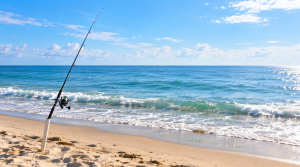
At the beach, breaking waves reveal important information about the underwater landscape. Waves generally break where the water becomes shallow, often indicating a sandbar. Behind that bar, a darker strip of calmer water may indicate a deeper trough.
Troughs can act as underwater travel routes for fish. Waves disturb sand fleas, crabs, and other organisms, carrying food into these deeper areas. Predatory fish may patrol the trough looking for an easy meal.
Also look for gaps between breaking waves. These gaps can indicate cuts or deeper channels running through a sandbar. Fish often feed along the edges of these channels, where moving water carries small prey.
Instead of automatically casting toward the horizon, try fishing the first trough or a nearby channel. These features may be much closer to shore than you expect.
Fish Around Piers and Bridge Pilings
Piers and bridges create artificial reefs. Barnacles and mussels grow on submerged pilings, attracting crabs, shrimp, and small fish. Larger predators visit these structures to feed.
- Near the shoreline: Target the troughs and sandbar edges just as you would from the beach.
- Along the pilings: Present bait near the structure, where fish find shelter and food.
- At the deeper end: Look for schooling baitfish and predators chasing them.
- Along shadow lines: Fish may wait where light and darkness meet, especially around illuminated piers at night.
Fish close to the structure rather than always casting into open water. Be aware of snags, fishing regulations, and other anglers when working around crowded piers.
Explore Jetties and Rocky Shorelines
Jetties provide shelter and feeding opportunities because the gaps between rocks attract small marine animals. Focus on the boundary where sand meets rock, the deeper water near the jetty tip, and the edges of moving currents.
Rocky points and ledges can also be productive. Waves dislodge shellfish and crabs, while the resulting whitewater can provide cover for feeding predators. Cast near the edge where foamy water transitions into clearer water.
Rock fishing requires extra caution. Wear footwear with good traction, use a suitable life jacket, monitor waves before approaching a fishing position, and avoid exposed rocks that waves can reach. Never turn your back on the ocean.
Rock fishing centers on the wash, so cast to where white water fades into blue and look for gutters, points, weed beds, and ledges. It is also dangerous. Watch your spot for at least half an hour to see how the biggest waves behave, wear a life jacket and grippy shoes, and never fish alone
Where to Find Common Saltwater Species From Shore
- Redfish: Troughs, cuts, oyster bars, and flooded grass at high tide.
- Striped bass: Rocks, jetties, white water, and inlet edges, often best at night.
- Pompano: The first trough, picking sand fleas from the wash.
- Flounder: Buried at jetty edges, creek mouths, and channels.
- Sheepshead: Pilings, rocks, and bridges.
- Spotted seatrout: Grass flats, channel edges, and dock lights at night.
- Snook: Bridges, docks, and inlets in warm water.
3. Use Tides to Locate Feeding Fish
Tides are among the most important factors in saltwater fishing. As water rises and falls, currents transport shrimp, crabs, and baitfish through channels, inlets, creeks, and coastal flats.
How to Find Fish in Saltwater Using Tides
Start by checking a tide chart for the exact location you plan to fish. Identify the expected high and low tides, then determine when the water will be moving through your chosen fishing area.
Many locations produce better fishing during a moving tide because currents carry food past waiting predators. Slack tide, when the current temporarily slows or changes direction, can reduce feeding activity in some areas, although fish may still bite.
Different locations respond to tides differently:
- Rising tide: Fish may move onto shallow flats, flooded grass, and areas along mangroves to feed.
- Falling tide: Fish often gather near creek mouths and channel edges as water drains from shallow habitat.
- High tide: Deeper water over shallow flats can give fish access to feeding areas that are otherwise exposed.
- Low tide: Exposed sandbars, channels, rocks, and holes reveal underwater structure that can guide your next trip.
Low tide is especially useful for scouting. Study the exposed shoreline and note where deeper channels cut through shallow areas. When the water returns, these features can become productive fishing targets.
Remember that there is no universally perfect tide. Local geography, current strength, species, weather, and water conditions all influence the best fishing window.
The moon also sets tide size. Around full and new moon, tides are bigger and the current runs harder. Around half moon, they are smaller and gentler. Low tide is also the best time to scout, because the water pulls back and reveals the bars, holes, and rocks fish will use when it returns. Look up a free tide chart for your exact spot before you go.
When the tide moves, the food moves. Water rushing through creeks, inlets, and channels carries shrimp, crabs, and baitfish, and that is when fish feed. At slack tide, the stretch around dead high or dead low, the bite often slows. A good rule is to avoid roughly 30 minutes either side of the turn and fish the moving water. This holds offshore too: on a wreck or hard bottom, fish can bite nonstop and then shut off the moment the current stops.
4. How to Find Fish on a Saltwater Flat
Saltwater flats are shallow coastal areas that may contain sand, mud, submerged grass, or scattered oyster beds. Although the water can be only a few feet deep, flats often support abundant shrimp, crabs, and baitfish that attract larger predators.
Target Grass Edges and Oyster Bars
Grass flats frequently hold species such as redfish and spotted seatrout. Focus on the edges of grass beds, nearby channels, and changes in bottom depth. These boundaries give predators opportunities to ambush prey moving across open water.
Oyster bars also provide productive habitat. Their rough surfaces support small marine organisms, and predators may patrol the edges looking for food.
Watch for Signs of Feeding Fish
Look for baitfish flickering at the surface, unexplained ripples, or fish tails breaking the water as fish root through shallow grass for crabs. These signs can reveal active feeding areas.
A popping cork with live shrimp is one option for fishing grass flats. Adjust the bait depth to suit the water and present it near likely feeding zones without constantly disturbing the area.
5. Use Technology: Fish Finders, Maps, and Apps
You can scout before you leave home. Satellite Maps views show breaking waves over bars, darker troughs, and gaps in the white that mark cuts.
You don’t need a boat or expensive electronics to begin identifying productive saltwater fishing locations. Satellite maps and aerial imagery can help you understand shoreline features before arriving.
Use Satellite Maps to Identify Structure
Look for bridges, piers, jetties, rocky points, creek mouths, channels, and areas where shallow water meets deeper water. At beaches, visible wave patterns may help reveal sandbars and channels, although aerial imagery cannot always show underwater features accurately.
Pay particular attention to places where several useful features overlap. For example, a bridge near an inlet may offer structure, moving water, and a channel that concentrates baitfish.
This approach can be especially useful when visiting an unfamiliar coast for only a day or two. Rather than choosing a random location, you can begin with a shortlist of spots that have identifiable fishing potential.
When Should You Use a Fish Finder?
Electronics can provide additional information when fishing from a boat or in other situations where a compatible sonar device is practical. A fish finder can help reveal depth changes, bottom contours, and possible fish concentrations.
To understand how to find fish in saltwater with a fish finder, first learn to distinguish the bottom from objects suspended in the water column. Look for channels, drop-offs, and changes in bottom composition, then compare the sonar information with visible bait activity and current conditions.
Remember that sonar readings do not always identify individual fish with certainty. Interpret them alongside your knowledge of habitat and feeding behavior.
For surf anglers who want a tool to estimate depth from shore, the best casting depth finder for saltwater surf fishing depends on casting range, wave conditions, ease of reading the results, and compatibility with the angler’s setup. However, you can learn a great deal about surf structure simply by observing breaking waves, troughs, and cuts.
6. Understand Weather, Seasons, and Time of Day
Fish location changes with temperature, light, wind, and seasonal movements. A productive spot in the morning may become less active as the water warms or the current changes.
What Time of Day Is Best for Saltwater Fishing?
Dawn and dusk are often productive periods because many predatory fish move into shallower water to feed under lower-light conditions. Early morning can be especially useful during hot weather, when shallow water has not yet warmed significantly.
During bright midday conditions, fish may move toward deeper water, shaded structures, or areas with active current. On cloudy days, some predators may roam more freely and chase baitfish in open water.
Night fishing can also produce excellent results. To learn how to find fish in saltwater at night, focus on illuminated docks, bridges, and piers. Lights attract small organisms and baitfish, while larger predators may wait just beyond the illuminated area.
Pier, bridge, and dock lights draw in shrimp and baitfish, and bigger fish sit in the dark just outside the light, facing the current and ambushing what drifts in. Many large fish feed close to shore after dark, and striped bass, seatrout, and snook are often good targets around lights.
Adjust Your Strategy to the Season
- Spring: Warming water can encourage fish to move into coastal areas and along the shoreline.
- Summer: Fish may feed early and late, then seek deeper water or shade during the hottest part of the day.
- Fall: Baitfish movements can attract predators along beaches, inlets, and bays.
- Winter: Many fish favor deeper, more stable water, although sunny afternoons may warm shallow muddy flats enough to attract feeding fish.
Water temperature is often more useful than the calendar alone. Check local fishing reports, weather forecasts, and available coastal water-temperature information before deciding where to fish.
Pay Attention to Wind and Surf
A moderate onshore wind can stir up food and create favorable feeding conditions along some beaches. However, strong winds and heavy surf can make fishing difficult and dangerous.
If the water is extremely rough, dirty, or full of seaweed, consider a more sheltered bay or another protected location. Always check the surf forecast, and leave exposed beaches, piers, and rocky areas if thunderstorms approach.
7. Choose the Right Gear for Your Fishing Location
Finding fish is only part of the process. Your equipment should match the location, target species, bait, and expected conditions.
Best Saltwater Fishing Setup for Beginners
A practical beginner setup includes a suitable saltwater spinning rod and reel, fishing line matched to the target species, terminal tackle, and bait or lures appropriate for the location.
- Beach fishing: Choose a rod long enough to manage surf conditions and cast your intended rig comfortably.
- Pier fishing: Select a rod and reel that can handle the target species while remaining manageable around pilings and other anglers.
- Jetty fishing: Use equipment suited to the current, rocky terrain, and strength of the fish you expect to catch.
- Flat fishing: A lighter spinning setup may be suitable for presenting shrimp, small lures, or other natural baits in shallow water.
The best saltwater fishing gear for beginners doesn’t need to be expensive. Start with dependable equipment, learn how to set your reel’s drag, and carry the sinkers, hooks, leaders, and spare tackle required for your chosen fishing method.
Match Your Bait to Available Food
Natural bait can be effective when it matches what fish are already eating. Shrimp, cut bait, and locally available baitfish are common options, depending on the target species and local regulations.
Chumming, sometimes called berleying, involves releasing small amounts of bait or fish scraps into the water to attract feeding fish. It can help concentrate fish in certain situations, but it is not necessary for every fishing trip. Follow local rules and avoid introducing prohibited materials into the water.
When fishing surf, a pyramid sinker can help hold bottom in sandy conditions. A fish-finder rig allows the line to move through a sliding sinker arrangement, helping a fish take bait with less immediate resistance from the weight.
8. A Simple Plan for Finding Fish on Your Next Trip
Use this practical routine whenever you visit an unfamiliar saltwater fishing location.
- Check the conditions: Review the weather, tide chart, wind, surf forecast, and relevant fishing regulations.
- Study the map: Identify nearby channels, bridges, jetties, points, troughs, and other structural features.
- Arrive and observe: Spend five minutes watching the water before casting.
- Look for clues: Watch diving birds, surface disturbances, foam lines, color changes, and areas where currents meet.
- Choose a high-potential spot: Prioritize locations with structure, food sources, and moving water.
- Start close: Fish the nearest promising trough, piling, or channel edge rather than assuming fish are far offshore.
- Give each spot time: Spend around 15 minutes working a promising location before moving if there are no signs of activity. Adjust this interval to the conditions and fishing method.
- Record what works: Note the tide, location, bait, weather, and time of each catch.
Over time, these observations help you recognize repeatable patterns. If you catch fish along a channel edge during a falling tide, look for similar habitat in other areas and test it under comparable conditions.
Read the Water Before You Cast
Don’t cast right away. Watch for five minutes, because the sea is full of clues:
- Birds: Diving terns and pelicans mean baitfish, often with bigger fish pushing them up.
- Nervous water: Small flicks and ripples on a calm patch can reveal a bait school.
- Foam lines and color changes: These mark where currents meet and food piles up.
- Breaking versus calm water: Breaking means shallow, calm gaps mean deep.
Polarized sunglasses cut glare so you can see troughs, rocks, and sometimes fish.
Your Simple First-Cast Plan
- Check the tide first and plan to fish moving water.
- Arrive early and look before you cast.
- Find the structure: trough, cut, pilings, rocks, or edges.
- Start with the closest spot and give it about fifteen minutes before moving.
- When you catch a fish, note the spot, tide, and bait, then repeat that pattern.
Check local rules too. Most places require a saltwater license, and each species has size and bag limits. Your local tackle shop can tell you what is biting.
Seasons, Wind, and Water Temperature
Water temperature matters more than the calendar. In spring, fish move in as the water warms. In summer, they feed early and late and retreat to deeper or shaded water at midday. Fall is often the best season, when baitfish pour out of the bays and everything follows them. In winter, many fish slip into channels, inlets, and deep bay holes, and sunny afternoons can warm dark, muddy flats. Wind onto shore builds the surf and stirs up food, while offshore wind flattens and clears it. Give big storms a day or two to settle, and get off the beach, pier, and rocks if you hear thunder.
Frequently Asked Questions
1. What is the easiest way to find saltwater fish?
Start by locating structure, baitfish, and moving water. Beaches with troughs and cuts, bridges with pilings, rocky points, and creek mouths are useful places to investigate. Observe the water before casting.
Look for structure, depth changes, and moving water, then fish the tide. Spots that combine safety, food, and current are the best bets.
2. Is it better to fish at high tide or low tide?
Neither tide is always best. Rising water can give fish access to shallow flats and flooded grass, while falling water can concentrate prey near creek mouths and channels. Fish the tide that best suits your chosen location.
3. Can you catch saltwater fish close to shore?
Yes. Many species feed in the first trough along a beach, around pier pilings, near jetty rocks, and along shallow channel edges. Long casts are not always necessary to reach productive water.
4. Do you need a fish finder to locate saltwater fish?
No. A fish finder can help when used in suitable conditions, but you can identify many promising locations by studying maps, watching waves, recognizing structure, checking tides, and observing baitfish activity.
5. What are the best signs that fish are feeding nearby?
Look for diving birds, baitfish breaking the surface, nervous water, visible feeding activity, and foam lines where currents meet. These clues can indicate that prey is concentrated in the area.
6. Is night fishing good for saltwater species?
Night fishing can be productive around illuminated piers, bridges, and docks. Baitfish often gather around lights, attracting predators that feed along the boundary between illuminated water and darkness.
Doing night fishing in saltwater is worth because lights concentrate bait, and predators lurk at the edge of the glow.
7. What time of day is best for saltwater fishing?
Dawn and dusk are strong, but the tide often matters more. Aim for the moving parts of the tide rather than slack water.
8. Do I need a boat to find saltwater fish?
No. Beaches, piers, jetties, bridges, and bay shorelines all offer excellent access to fish.
9. Can a fish finder help me find saltwater fish?
Yes, but it works best when you already know the structure and tide, so use it to confirm what you’ve read from maps and conditions.
Conclusion: Find the Fish Before You Cast
Successful saltwater fishing begins with understanding where fish want to be. Instead of randomly casting into open water, look for the combination of structure, food, and current that creates a natural feeding area.
Learn to read beach troughs, identify channels around bridges and jetties, explore the edges of grass flats, and use tide charts to plan your fishing time. Satellite maps, weather reports, and careful observation can help you narrow down productive locations before you even leave home.
Key Takeaways
-
- Find structure, bait, and moving water to identify promising fishing spots.
- Fish troughs, cuts, pilings, rocky edges, and channel drop-offs instead of automatically casting farther.
- Use tide charts to plan around the movement of water and local feeding patterns.
- Watch birds, baitfish, foam lines, and surface disturbances for clues about feeding activity.
- Match your fishing gear and bait to the location and target species.
- Record successful combinations of location, tide, time, and bait so you can repeat them.
- Fish gather where safety, food, and easy feeding overlap.
- Structure, depth changes, and edges are your best targets.
- Fish moving water and avoid slack tide when possible.
- Scout with satellite maps and tide charts before you go.
- Watch birds, ripples, and foam lines for five minutes before casting.
- Use live bait, appropriate hook and leader sizes, and simple gear.
- Respect safety on rocks, jetties, and piers.
The ocean may look enormous, but fish often concentrate around a surprisingly small number of productive areas. Learn to recognize those locations, pay attention to changing conditions, and approach each trip with a plan. The more carefully you read the water, the less you need to rely on luck.
Always learn to read structure, check the tide, and watch the water before your first cast, and you will replace luck with a repeatable plan
