

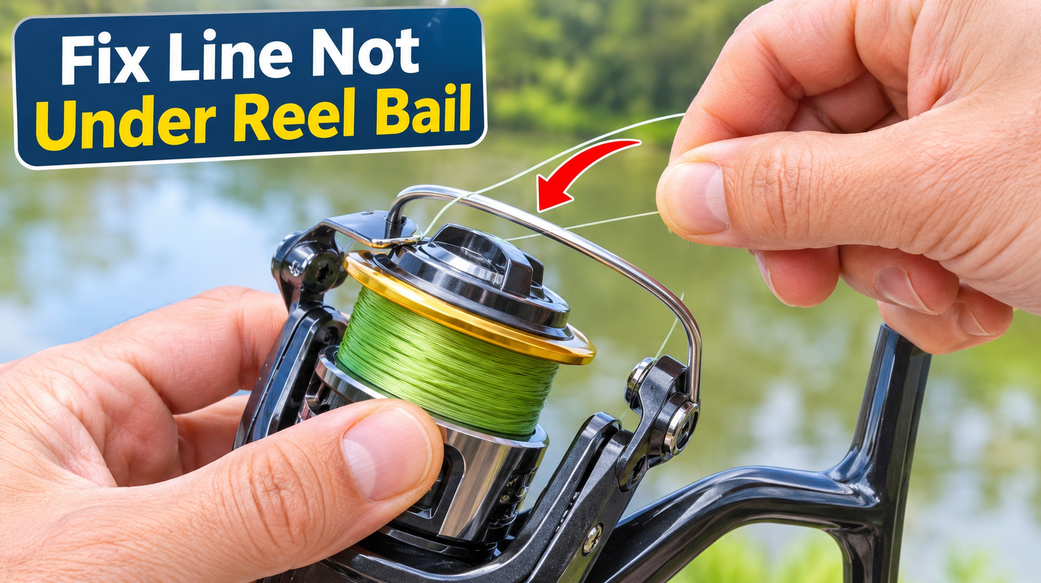
How to Fix Line Under Reel Bail and Troubleshoot Common Bail Mistakes
Have you ever finished setting up your fishing rod, threaded the fishing line through every guide, tied on your favorite lure, and suddenly realized you forgot to run the line underneath the spinning reel bail? It is a frustrating mistake that can happen to beginners and experienced anglers alike.
Fortunately, you do not need to cut your fishing line, remove your lure, and re-string your entire rod. There is a simple trick that allows you to correct this mistake in just a few minutes without starting over.
However, forgetting to run your line under the bail is not the only problem spinning reel owners encounter. A sticking bail, bent bail wire, damaged spring, or incorrectly positioned internal component can also prevent the bail from working properly.
In this guide, we will explain how to fix line is not under reel bail, repair a sticking spinning reel bail, and troubleshoot common problems that prevent your reel from closing correctly. These practical techniques will help you save time, maintain your fishing equipment, and get back to fishing without unnecessary frustration.
Why the Line Must Run Under Reel Bail Arm
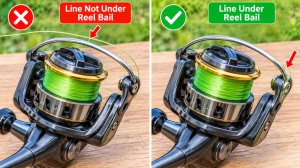
On a spinning reel, the bail arm guides the line onto the spool. When the bail is closed, the line travels through the line roller and wraps evenly around the spool as you turn the handle. If the line was never placed under the bail, it simply sits outside the system. Cranking the handle does nothing, and you can’t retrieve a lure or fight a fish.
How the Mistake Usually Happens
The mistake is easy to make because everything feels normal until the very end. A typical sequence goes like this:
- You tighten the reel into the reel seat.
- You string the line through all the rod guides.
- You tie on your terminal tackle or lure.
- You start to reel and realize the line isn’t engaged.
That is the moment most people panic. Don’t. There is a much simpler answer than starting over.
Don’t Cut and Re-String
Many anglers, myself included at one time, handle this by snipping off the lure, pulling the line back through every guide, running it under the bail, re-stringing the whole rod, and re-tying the lure. That can easily waste five to ten minutes, and it costs you line. It also wastes prime fishing time, which is never a good trade.
1. How to Fix Line Not Under Spinning Reel Bail Without Re-Stringing
One of the most common beginner mistakes is threading fishing line through the rod guides without first running it underneath the spinning reel bail.
When this happens, the fishing line is not properly engaged with the reel’s line management system. Turning the handle will not retrieve the line as expected.
The traditional solution is to cut off your lure, pull the line back through every guide, open the bail, run the line underneath it, and re-string the entire rod.
Fortunately, there is a much easier method.
Step-by-Step Instructions
Step 1: Loosen and Remove the Drag Knob
Start by locating the drag adjustment knob on top of your spinning reel spool.
Turn the drag knob counterclockwise until it comes loose. Remove the knob and place it somewhere safe so you do not accidentally lose it.
Some spinning reels have a rear drag system instead of a front drag system. On many rear-drag models, you can remove the spool by pressing the release button rather than unscrewing a front drag knob.
Always check your reel’s design before removing any components.
Step 2: Remove the Spool
Once the drag knob is removed, carefully lift the spool away from the reel.
Keep the fishing line attached to the spool. There is no need to cut your line, remove your terminal tackle, or pull the line back through the rod guides.
This is the important trick that makes the entire process easier.
Step 3: Open the Bail Arm
With the spool removed, flip the spinning reel bail arm into its open position.
The bail wire should now be out of the way, allowing you to reinstall the spool without the line remaining outside the bail mechanism.
Step 4: Reinstall the Spool
Carefully place the spool back onto the reel shaft while keeping the bail open.
Make sure the spool sits correctly in its original position. Reinstall the drag knob and tighten it according to the reel manufacturer’s instructions.
Do not force the spool or drag knob if the components do not align properly.
Step 5: Close the Bail and Check the Line
Flip the bail arm back into its closed position.
Your fishing line should now be correctly positioned underneath the bail wire. Turn the reel handle slowly and check that the line moves through the line roller and winds evenly onto the spool.
Adjust the drag to your preferred setting before fishing.
Why This Method Works
Removing the spool temporarily gives you access to the bail mechanism without disconnecting your fishing line from the rest of the rod.
Instead of repeating the entire rigging process, you simply open the bail, reinstall the spool, and allow the line to sit in the correct position.
This technique is especially useful when you have already threaded the line through all the guides and tied on a hook, jig, or other terminal tackle.
2. How to Fix a Sticking Bail on a Spinning Reel
A sticking bail is another common spinning reel problem. You may notice that the bail does not close smoothly, refuses to lock into position, or feels unusually loose when you operate it.
Sometimes the bail opens and closes halfway before getting stuck.
In many cases, the problem comes from dirt, insufficient lubrication, a bent bail wire, or an incorrectly positioned bail spring.
Before replacing expensive reel components, inspect these three common problem areas.
Problem 1: Dirty or Dry Bail Spring
The bail spring helps control the opening and closing movement of the bail arm.
Over time, dirt, water, and old lubricant can affect the spring mechanism. The spring may become sticky and prevent the bail from moving freely.
How to Repair It
- Use a Phillips-head screwdriver to carefully remove the screws securing the bail arm components.
- Remove the necessary cover or bail arm component to access the spring mechanism.
- Inspect the bail spring for dirt, corrosion, damage, or signs of wear.
- Apply a small amount of fishing reel oil to the appropriate moving contact points.
- Check that the mechanism moves freely without excessive resistance.
- Reinstall the components and tighten the screws carefully.
- Open and close the bail several times to distribute the lubricant.
You do not need to apply excessive oil. A small amount is generally sufficient for the moving parts.
If the spring is broken, badly corroded, or permanently weakened, lubrication will not solve the problem. You may need to replace it with a compatible part.
Problem 2: Bent Bail Wire
A bent bail wire is one of the most common reasons a spinning reel bail refuses to close properly.
This can happen when you drop your reel, throw your fishing equipment into a vehicle, or accidentally place heavy objects on top of your tackle.
Even a small bend can change the alignment and tension of the bail mechanism.
When the bail wire is out of shape, it may push against the internal components instead of sitting naturally in its correct position.
How to Repair a Bent Bail Wire
- Remove the screw securing the affected bail arm using the appropriate screwdriver.
- Carefully separate the bail arm from the reel body.
- Inspect the bail wire and identify whether it is bent or creating unnecessary tension.
- Check whether the wire naturally sits in its correct mounting position.
- If it has a minor deformation, carefully restore its original alignment without applying excessive force.
- Reinstall the bail arm and secure the screw.
- Test the bail several times to confirm that it opens and closes smoothly.
The important point is that the bail wire should sit naturally in its designated position without forcing the surrounding components.
Do not aggressively bend the wire. Excessive pressure can weaken or permanently damage it.
If the wire is sharply bent, cracked, or does not retain its original shape, replacing it is usually the better solution.
Problem 3: Bail Spring Peg Is in the Wrong Position
Sometimes the bail wire looks perfectly fine, the spring is not broken, and the reel still refuses to close.
The problem may be caused by incorrect spring positioning inside the bail mechanism.
Some spinning reel designs use a small peg, groove, and hole to position the bail spring correctly.
If the spring peg accidentally enters the wrong groove during reassembly, the mechanism may not operate as intended.
How to Correct the Spring Position
- Locate the bail arm side that contains the spring mechanism.
- Remove the appropriate retaining screw and carefully separate the necessary components.
- Inspect the internal mechanism to identify the groove, positioning hole, and spring peg.
- Locate the correct hole where the bail spring peg needs to sit.
- Use a small, suitable tool to carefully guide the spring peg into its designated hole.
- Make sure the spring is not sitting inside the wrong groove.
- Hold the spring in position while carefully reinstalling the screw.
- Reassemble the bail arm and test the opening and closing movement.
This step can be difficult because the components are small. Take your time and avoid forcing anything into position.
If the spring does not align naturally, remove the component and inspect the positioning again rather than tightening the screw against a misaligned part.
Remember that different spinning reel models use different internal spring arrangements. Consult the manufacturer’s service diagram when necessary.
3. How to Fix Fishing Reel Bail Won’t Close
If your fishing reel bail won’t close, start by understanding what a stuck bail can do.
A bail that stays open, closes halfway or refuses to lock can affect casting, line retrieval, and overall reel performance. The bail may stop working altogether, the line may not wrap correctly, and the reel can feel rough and unreliable. It may even create extra wear on the line roller over time.
Use the following troubleshooting checklist to identify the likely cause.
Common Causes to Check
- Dirt and old grease inside the bail arm
- A weak or worn bail spring
- Loose screws
- Parts slightly out of position after long use
A Simple Troubleshooting Order
- Tighten any loose screws first.
- Inspect the bail wire for bends and straighten it if needed.
- Clean and lightly oil the spring and contact points.
- Check that the spring peg and wire peg sit in their correct, separate openings.
- If the spring is truly broken, replace it.
After completing the inspection, operate the bail slowly. It should move smoothly and sit correctly in its open and closed positions. If the mechanism still refuses to work, inspect the internal assembly or consider professional reel servicing.
Later on, make sure to check your reel regularly, especially if you fish often or in dirty or salty conditions. Rinse it after use, keep it lightly lubricated, and store it carefully so the bail wire isn’t crushed in your vehicle or tackle bag. Most bail problems can be avoided with a little care.
Frequently Asked Questions
How do I fix a fishing line that is not under the spinning reel bail?
Remove the drag knob and spool, open the bail arm, and reinstall the spool while keeping the bail open. Reinstall the drag knob, close the bail, and check that the line is correctly positioned underneath the bail wire. This method can save you from re-stringing your entire fishing rod.
Can I fix line under reel bail without re-stringing?
Yes. Most front-drag spinning reels allow you to remove the spool by unscrewing the drag knob. Once the spool is removed, open the bail and reinstall the spool. This allows you to correct the line position without pulling the line back through every rod guide.
Why is my spinning reel bail sticking?
Common causes include dirt inside the bail mechanism, insufficient lubrication, a damaged spring, a bent bail wire, or incorrectly positioned internal components. Inspect these areas before deciding whether a replacement part is necessary.
How do I fix a sticking bail on a spinning reel?
Start by inspecting the bail arms and spring mechanism. Clean dirty moving components, apply a small amount of reel-compatible oil, and check for bent or misaligned parts. If the spring is damaged, replace it with a compatible component.
Why won’t my fishing reel bail close?
A spinning reel bail may refuse to close because of a bent bail wire, loose screws, a broken spring, or an incorrectly positioned spring peg. Inspect the mechanism and make sure all components are correctly aligned.
Can I bend a spinning reel bail wire back into shape?
Minor deformation may sometimes be corrected carefully, but repeatedly bending the wire can weaken it. If the wire is sharply bent, cracked, or unable to retain its shape, replace it instead of forcing it back into position.
Does a spinning reel bail need lubrication?
Yes. Appropriate reel oil can help maintain smooth movement in the bail mechanism. Apply a small amount to the manufacturer’s recommended lubrication points. Avoid using excessive oil or general-purpose lubricants that are not suitable for fishing reels.
Should I replace the bail spring if it stops working?
Not necessarily. First inspect it for dirt, incorrect positioning, and insufficient lubrication. If the spring is broken, worn out, or permanently weakened, replacement is the appropriate solution.
Conclusion: Get Your Spinning Reel Working Properly Again
A spinning reel bail problem does not always mean you need to replace your fishing reel or spend money on professional repairs.
If your fishing line is not underneath the bail, removing the spool and opening the bail can solve the problem without re-stringing your entire rod. It is a simple trick that can save valuable time, especially when you have already tied on your fishing lure.
For a sticking or malfunctioning bail, start by checking the three most common issues: a dirty or dry spring mechanism, a bent bail wire, and an incorrectly positioned spring peg.
Take your time when inspecting small components, use appropriate reel lubricant, and avoid forcing parts into position.
Key Takeaways
- Forgot to run your line under the bail? Remove the spool, open the bail, and reinstall the spool to correct the problem without re-stringing.
- Bail feels sticky? Inspect the spring mechanism and apply a small amount of appropriate reel oil.
- Bail won’t close? Check the bail wire for bends, damage, and alignment problems.
- Spring mechanism is not working? Check whether the spring peg is positioned in the correct hole.
- Prevent future problems: Protect your reel during transportation and perform regular cleaning and maintenance.
With these simple troubleshooting techniques, you can keep your spinning reel operating smoothly and spend less time fixing equipment and more time catching fish.
