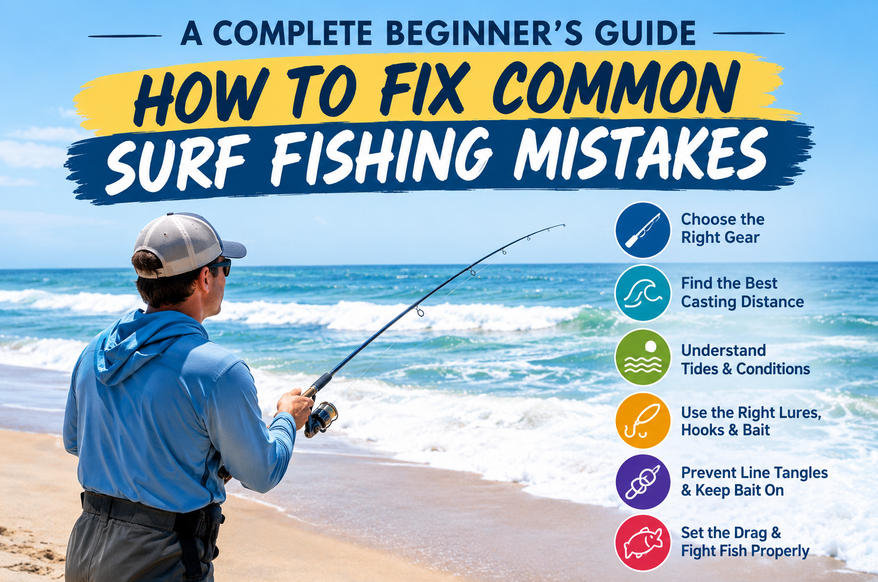
Easy Guides to Avoid Surf Fishing Mistakes: How to Fix Them for Surf Anglers
Surf fishing looks simple: choose a beach, cast your line, and wait for a bite. But experienced anglers know that small mistakes with gear, bait presentation, casting distance, and location can turn an entire fishing trip into a frustrating day. The good news is that most of these problems are easy to correct once you understand what is happening beneath the waves.
Whether you are targeting striped bass, red drum, pompano, whiting, or other coastal species, learning how to fix common surf fishing mistakes can improve your chances of success.
The following guide combines practical advice from experienced surf anglers, including how to read beach structure, select appropriate tackle, present bait naturally, and fight fish without breaking your line.
1. Avoid Using the Wrong Surf Fishing Gear
One of the most common surf fishing beginner mistakes is choosing a rod and reel that do not match the fishing conditions or target species. Heavy, poorly balanced equipment can make casting tiring, reduce accuracy, and cause unnecessary strain during a long session.
Choose the Right Rod Length
A short rod holds your line low in the breakers, so every wave drags it into a belly and pulls the bait out of the trough
A surf rod around 9 to 11 feet is a useful starting point for many open-beach situations. A 10-foot rod offers a practical balance between casting distance, line control, and comfort. Longer rods may help clear breaking waves, while shorter rods can be suitable for protected back bays or nearby channels.
However, longer casts are not always better. Choose a rod based on the beach, current, sinker weight, and fish you expect to encounter.
.A medium-weight rod and a 4,000 to 5,000-size reel is plenty for panfish. For striped bass, guides recommend a 9 to 10-foot-6 rod, and a 10-footer is a happy medium. Reel sizing also varies by brand, so ask your local shop to pair a reel with your rod
Match Your Reel and Drag System
Do not select a reel by its size number alone. Manufacturers use different sizing systems, so a 5000-size reel from one brand may differ considerably from another. Ask a knowledgeable tackle-shop employee to match the reel’s capacity, drag performance, and construction to your rod and target species.
A balanced setup should be comfortable enough to cast repeatedly while providing sufficient strength for the fish you are pursuing. This is particularly important when targeting powerful striped bass around current, rocks, or bridge pilings.
2. Learn How Far to Cast Surf Fishing
Many beginners assume the biggest fish always stay far offshore. In reality, feeding fish frequently move into shallow water to search for sand fleas, crabs, shrimp, and other prey.
Before attempting a long cast, target the first trough the deeper strip of water between the shoreline and the first sandbar. Whiting, pompano, and red drum may feed surprisingly close to the beach.
Use a Progressive Casting Strategy
- First cast: Fish the wash and first trough close to shore.
- Second cast: Target the water beyond the first trough.
- Third cast: Explore the next trough or the deeper water beyond a sandbar.
- Adjust: Compare bites, current, and bait movement before committing to a distance.
Understanding how far to cast surf fishing means, where it often comes down to just 10 to 20 yards while learning where fish feed rather than trying to reach the greatest possible distance. A controlled, accurate cast into productive water can outperform a powerful cast that lands beyond the feeding zone.
Waves breaking near shore dig out a deeper strip called the first trough, and it fills with sand fleas and small crabs. Whiting, pompano and red drum come right into it to feed.
The Fix
- Make your first cast a short one, right where the wave turns around and pulls back.
- Work outward one trough at a time.
- Cast on the back end of a breaking wave so your bait lands in the foam blanket the wave just stirred up.
3. Read the Beach Before You Start Fishing
Location is often more important than expensive equipment. Fish use underwater structure and moving water to find food, conserve energy, and ambush prey. Learning to recognize these areas is one of the most valuable surf fishing tips for beginners.
Look for Troughs, Cuts, Holes, and Points
- Troughs: Deeper channels between the beach and sandbars where fish may feed.
- Cuts: Gaps in sandbars where water flows back toward the sea.
- Holes: Deeper depressions that can provide shelter and feeding opportunities.
- Points: Areas where sand projects outward and currents change direction.
- Eddies: Circulating water that can collect baitfish and attract predators.
Read Waves and Current
Breaking whitewater often indicates shallow water over a sandbar. Calmer water behind the breakers may indicate a trough, while a darker gap between breaking waves can indicate deeper water or a channel. These visual clues are not perfect depth measurements, but they help you identify promising places to investigate.
Inlets and bridges can also concentrate fish. Baitfish often gather around bridge pilings, shadow lines, and areas of reduced current. Predators may wait nearby for an opportunity to feed. When fishing around structures, use suitable tackle and avoid allowing hooked fish to run around pilings where your line can be damaged.
4. Stop Ignoring the Tide and Fishing Conditions
The beach changes throughout the tidal cycle. At low tide, shallow feeding areas may become exposed or too shallow to hold fish. As the tide rises, water moves into troughs and over sandbars, potentially bringing bait and predators closer to shore.
Many surf anglers prefer the last few hours of a rising tide, although the best window depends on the location, species, weather, and local conditions.
What Surf Fishing Mistakes at Low Tide Should You Avoid?
The biggest mistake is assuming the beach will fish the same way at every tide stage. Instead, use low tide to inspect the beach and identify sandbars, cuts, troughs, and holes. Return to productive areas as the water rises and changes the feeding opportunities.
On the other side, the surf fishing mistakes at low tide are usually about timing and observation. At dead low water, the first trough may be ankle-deep and too shallow for good fish. Slack water at the top or bottom of the tide also tends to mean a slow bite. Many anglers prefer the last few hours of the rising tide, when moving water carries food and fish into the trough.
The Fix
- Check a tide chart before you leave home.
- Walk your beach at low tide, photograph the bars, cuts and sloughs, then fish them on the rise.
- Fish sunrise and sunset when possible. Fish feel safer in shallow water in dim light, and a noon sun on a calm 95-degree day makes bites unlikely, though not impossible.
- Match the season to the species. Water temperatures in the 50s make fishing difficult, and pompano are best targeted from late March into early May in the Gulf.
Also consider sunrise, sunset, wind direction, wave height, and water clarity. Early morning and late evening can be productive periods, especially when they overlap with favorable tidal movement.
5. Use the Correct Lure, Hook, and Sinker
Another frequent mistake is attaching bait or extra weight to a lure without considering how the lure was designed to move. A swimming plug or jerkbait is intended to produce a particular action. Adding unnecessary weight or bait can interfere with that movement.
Choose a lure that matches the target species and intended presentation. Use bait rigs for natural bait fishing and swimming lures when you want to cover water and trigger a reaction strike.
A pyramid sinker digs in and holds in light surf, while a sinker with wire legs grabs the bottom in strong side current. If your line drifts down the beach after the cast, go heavier. On many beaches 2 to 4 ounces does the job
Match Hook Size to the Fish
A hook that is too large can make it difficult for smaller-mouthed species to take the bait properly. For whiting, pompano, and spot, small hooks may be more appropriate than oversized hooks intended for larger fish. Match the hook to the species, bait, and local fishing regulations.
Select a Sinker That Holds Bottom
A pyramid sinker can grip sandy bottoms in relatively moderate surf. A sinker with wire arms may hold more securely in stronger currents, depending on its design. If your rig repeatedly washes back toward shore, consider whether the sinker is too light or unsuitable for the conditions.
Use only a weight that your rod and rig can safely cast. Rough surf may require a different setup, but increasing sinker weight indefinitely is not the solution when conditions become unsafe.
The surf fishing mistakes in rough surf are mostly about holding bottom and keeping contact. When a wave hits your lure you may feel slack, so reel a little faster to stay connected. Let the waves control your lure speed rather than cranking constantly.
- White water means a sandbar, calm water behind it means a trough, and a dark gap means a cut.
- Darker green water is deeper, and light tan water is shallow sand.
- Check the wind before choosing a spot. A side wind puts a curve in the line and hides small bites. Go up a sinker size and cast slightly into the wind.
6. Keep Your Bait Fresh and Secure
If you have wondered, “why does my bait keep coming off surf fishing?” the cause may be soft bait, poor hook placement, or the repeated force of waves during the cast and retrieve.
How to Keep Bait on Hook Surf Fishing
Mushy bait is the number one reason people ask why does my bait keep coming off surf fishing. Frozen shrimp turns to mush as it warms, and every wave tugs at it. Here is how to keep bait on hook surf fishing style:
- Use fresh bait suitable for your target species.
- Keep shrimp, cut bait, and other perishable bait chilled in a cooler.
- Remove only the amount of bait you need instead of leaving everything in direct sunlight.
- Thread bait securely onto the hook and leave the hook point exposed where appropriate.
- Use bait elastic or suitable bait thread for soft bait when necessary.
- Check and replace bait regularly, particularly after strong waves or suspected bites.
Fresh bait can retain its texture and natural scent better than bait left warming in the sun. Check your bait every 15 to 20 minutes as a practical starting point, or sooner if the surf is washing it away.
If you keep reeling in a bare hook, the hook may be too big. For whiting, pompano and spot, start with a size 2 or 4 hook. Save larger hooks for red drum and bluefish
7. Protect Your Rod and Reel From Sand and Salt
Sand and saltwater can shorten the life of surf fishing equipment. Fine sand can work into moving reel components, while dried salt deposits contribute to corrosion.
How to Keep Surf Rod From Sinking in Sand
The simplest way to keep a surf rod from sinking in sand is to carry a sand spike, also called a sand rod holder. Push it firmly into suitable sand and place the rod inside while baiting hooks or waiting for a bite. If you do not have a spike, rest the rod securely across a stable bucket or support with the reel facing upward.
A sand spike also helps keep your rod positioned above the wash, improves line control, and reduces the chance of your reel contacting wet sand.
If you forgot the spike, lay the rod across a bucket with the reel side up. Never set a rod down reel first, because fine sand grinds into the bail roller and line.
Clean Your Equipment After Every Trip
- Gently rinse the rod, guides, line, and reel exterior with fresh water.
- Avoid high-pressure sprays that can force salt or sand deeper into the reel.
- Allow equipment to dry in a shaded, ventilated place.
- Follow the reel manufacturer’s instructions for lubrication and maintenance.
- Loosen the drag before storage if recommended by the manufacturer.
8. Manage Line Tangles and Wind Problems
Wind can push your fishing line sideways, creating a large bow between the rod tip and sinker. That bow makes subtle bites harder to detect and can cause your rig to drift away from the intended fishing area.
How to Fix Surf Fishing Line Tangles
- Stop retrieving if you feel an unusual snag or sudden resistance.
- Keep tension controlled and inspect the line for loops around the rod guides or reel bail.
- Remove loose loops carefully instead of pulling them tighter.
- Check the rig, swivel, and leader for twists or damage.
- Retie damaged knots and replace badly abraded line before casting again.
To prevent tangles, use a simple rig, check knots before fishing, use shorter hook arms, and reel up slack as soon as the lead lands so waves and wind do not wrap the line around the rig. In a side wind, consider casting slightly into the wind and taking up slack once the sinker settles. If weed repeatedly collects on the line, move to a cleaner area or simplify the rig.
Every extra bead and swivel is another place for weed to catch and line to wrap. In clear water, gaudy rigs can also spook fish. Keep it plain: one swivel, two hooks on short arms and a good snap for the sinker. Tie rigs at home and pull every knot hard before it goes in the box.
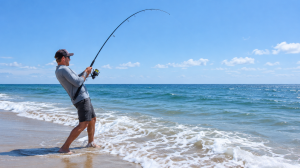
9. Set Your Drag Correctly and Fight Fish Smoothly
Finding fish is only part of the challenge. Poor fish-fighting technique can turn a solid hookup into a broken line or a lost fish.
How to Set Drag for Surf Fishing
Set the drag according to your line strength, rod power, reel specifications, hook type, and target species. The drag should provide controlled resistance while allowing line to leave the spool when a fish makes a strong run. Avoid tightening it fully without considering the rest of your setup.
Test the drag by pulling line steadily from the reel before casting. If possible, use a suitable scale to measure the resistance and follow the rod and reel manufacturers’ recommendations.
On the other hand, a good guide approach to how to set drag for surf fishing is to set it tight enough that you can barely pull line out by hand, then tighten slightly more for big fish. Just match it to your line and rod. Thirty-pound braid on an extra-heavy rod with a locked drag can snap on the hook set. Avoid rapid pumping, which tears the hole bigger and lets fish throw the hook. Keep the rod up, stay square to the fish, and lean back.
How to Set the Hook When Surf Fishing
When you detect a bite, maintain contact with the line and respond according to your rig and hook style. Circle hooks generally work best with steady pressure rather than a violent, exaggerated hook set. With other hook styles, a controlled sweep may help drive the hook home.
Once the fish is hooked, keep the rod bent and maintain steady pressure. Avoid dropping the rod tip toward the water, which can remove tension and give the fish an opportunity to throw the hook. Keep your body balanced and adjust your position as the fish moves.
Rather than repeatedly pumping the rod aggressively, use smooth movements and recover line when the fish allows it. This helps maintain pressure while reducing unnecessary strain on the hook, line, and fish.
10. Know When to Move and When to Stay
One of the most overlooked mistakes is fishing an unproductive stretch for hours. Surf fish often move along the beach in search of food, and a location that produced bites earlier may become quiet as the tide changes.
Give a spot a reasonable trial period. For example, fish for 30 to 40 minutes, check or refresh your bait, and reassess if nothing happens. If the area has no promising structure and produces no activity, move along the beach to another trough, cut, or hole.
If you are asking, “why am I not getting bites surf fishing?” work through the likely causes systematically:
- Check whether your bait is still fresh and attached.
- Try a shorter cast into the first trough.
- Look for changes in tide, current, and underwater structure.
- Confirm your sinker is holding bottom when using bait rigs.
- Adjust hook size or bait presentation to suit the target species.
- Move to another productive-looking area if conditions remain unchanged.
11. Recognize Rip Currents and Fish Safely
Knowing how to find a rip current for surf fishing can help you recognize potentially productive water, but safety must come first. A rip current may appear as a darker or calmer-looking channel between breaking waves, a gap in a line of whitewater, or a stream of foam and debris moving seaward.
In order to find a rip current for surf fishing, look for a gap in the breaking waves, a darker patch where waves do not break, or a line of foam moving seaward. Baitfish get swept through these channels, and predators wait at the edges where fast water meets calm.
These features can indicate a deeper channel where water returns offshore. Fish may use the edges of these channels to feed, but a rip current is not always easy to identify from shore.
Fish from dry sand and cast toward promising current edges. Never wade into a suspected rip current to reach a longer casting distance. Check local surf warnings and avoid fishing when waves, currents, lightning, or other conditions make the beach unsafe.
If caught in a rip current, stay calm, float if possible, and signal for help. Do not exhaust yourself fighting directly against the current. Follow local water-safety guidance; if able, swim parallel to shore to escape the narrow current before returning toward land.
Special notes: The same cut that holds fish is where a rip current runs. Fish it from dry sand and never wade into it. If a current ever pulls you out, do not swim straight at the beach. Swim parallel to shore until the pull lets go, then come in
Frequently Asked Questions
What surf fishing mistakes beginners make most often?
The most common mistakes include casting too far, ignoring tides, fishing unproductive locations, using unsuitable tackle, allowing bait to spoil, and fighting fish with inconsistent pressure.
Casting too far, fishing the wrong spot, ignoring the tide, using oversized gear and hooks, and using stale bait.
What surf fishing mistakes to avoid in rough surf?
Avoid fishing in unsafe conditions, using sinkers that cannot hold the bottom, standing too close to powerful waves, and wading into channels. Choose suitable tackle and move to a safer location if the surf becomes dangerous.
Why am I not getting bites surf fishing even with fresh bait?
You may be fishing outside the feeding zone, using an unsuitable hook or bait presentation, or fishing during an unproductive tide stage. Test different distances, inspect the beach structure, and move when a spot shows little promise.
How can I improve my surf fishing success quickly?
Start by studying the beach at low tide, fishing the first trough, checking the rising tide, keeping bait fresh, and matching your rod, reel, hook, and sinker to the conditions. These changes address many common problems without requiring expensive equipment.
What surf fishing mistakes should I avoid first?
Fix location and bait first. Even perfect gear will not catch fish in empty water or with bad bait.
What are good surf fishing tips for beginners?
Cast short first, fish a rising tide, walk the beach at low tide to find cuts and troughs, carry fresh bait and use a 9 to 11-foot rod.
How long should I fish one spot?
About 30 to 40 minutes with two fresh baits, then move.
Is surf fishing safe?
Yes, if you stay out of cuts and rip currents and fish from dry sand. Check local regulations for size and limits before keeping fish.
Conclusion
Learning how to fix common surf fishing mistakes is about understanding the relationship between your tackle, bait, tides, beach structure, and fish behavior. The best anglers do more than cast far and wait. They observe the water, test productive locations, maintain their equipment, and adjust when conditions change.
Surf fishing rewards observation more than distance. Read the water, time the tide, keep your bait fresh and your gear simple, and you will turn many empty trips into productive ones. The best single step is to walk your beach at low tide without a rod, then fish those spots on the rise.
Key Takeaways
-
- Choose a balanced rod and reel suited to your target species.
- Start close to shore before increasing casting distance.
- Study tides, troughs, cuts, holes, and current edges.
- Use fresh bait, appropriate hooks, and sinkers that suit the surf.
- Protect your reel from sand and rinse salt from your gear after fishing.
- Maintain steady rod pressure and a suitable drag when fighting fish.
- Move to another location when the water stops producing opportunities.
- Prioritize beach and water safety over reaching a promising-looking spot.
- Cast short first and fish the first trough.
- Walk the beach at low tide and fish it on the rise.
- Fish cuts, holes and sloughs from dry sand, and never wade into a rip.
- Use fresh, small bait pieces and smaller hooks.
- Use a 9 to 11-foot rod, matched reel and the right sinker.
- Keep rigs plain, rinse gear and keep the reel out of the sand.
- Keep the rod tip up, set drag sensibly and avoid fast pumping.
- Move on if the spot is dead.
Apply these surf fishing beginner mistakes and solutions one at a time. With practice, you will become more confident at reading the beach, selecting the right presentation, and making every trip more productive.

One thought on “How to Fix Common Surf Fishing Mistakes”